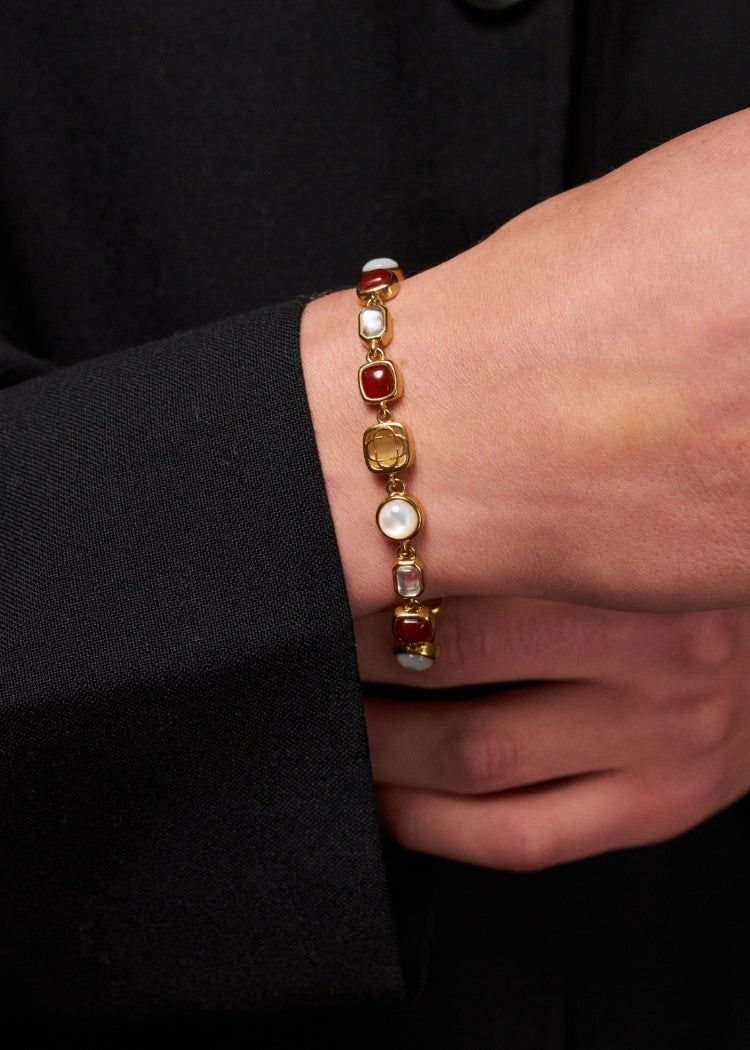
GEMSTONE BRACELETS
SHOP NOW



Cart
Your cart is empty
Your gifting options
Make your gift extra special with our luxury packaging options. Select a gift bag, gift box or a combination to create the perfect presentation.

Luxury Gift Box, Gift Bag & Wrapping Kit ($8.99)
Includes: CRAFTD Luxury Gift Box, Gift Bag, Tissue Wrapping Paper & Ribbon

Meaning Card ($2.99)
Add more meaning to your gift with a meaning card included with your order.
15 variations available

Luxury Gift Box ($5.99)
Choose your option
To My Boyfriend

To My Husband

To My Soulmate

To My Son

To My Grandson

To My Brother

To My True Friend

To My Dad

A Symbol Of Strength

A Symbol Of Faith

A Symbol Of Protection

A Symbol of Luck

A Symbol Of Safe Travel

A Symbol Of Self Belief

A Symbol Of Adventure

Pure gold doesn't tarnish. It's one of the least reactive metals there is, which is exactly why it has been worn as jewelry for thousands of years.
So why does so much gold jewelry fade, dull or turn your skin green within a year? Because very little of it is pure gold, and a lot of it is barely gold at all. The answer depends on what's under the surface, and that's what this guide is about: solid gold, gold plated and gold vermeil, how each one behaves, how to tell which you own, and how to keep it looking the way it did on day one.

Gold itself doesn't tarnish. What sits under it decides the rest. Featured: the 3mm Rope chain in gold.
Jump to:
| Type of gold | Tarnishes? | Why |
|---|---|---|
| Pure gold (24K) | No | Gold doesn't react with air or water. Too soft for most jewelry |
| Solid 18K gold | Barely | 75% gold, so very little else to react |
| Solid 9K to 14K gold | Can dull slowly | More alloy metal, which can react a little over years |
| Gold plated over brass or copper | Yes, once it wears | The base metal reacts as soon as the thin gold wears through |
| Gold plated over stainless steel | No | Steel doesn't rust, tarnish or react with skin |
| Gold vermeil (gold over sterling silver) | Only after years | A thick gold layer over silver, which tarnishes only if it's exposed |
| Gold-filled and gold-tone | Varies | Depends entirely on the metal underneath and how thick the gold is |
Tarnish is a chemical reaction. On most metals it's a reaction with sulfur compounds or moisture in the air, and it leaves a dark film on the surface. Silver does it, copper does it, and brass does it.
Gold doesn't. It sits among the least reactive metals on the periodic table, so it simply doesn't take part in that reaction. A pure gold coin that has been buried for centuries comes out of the ground the same color it went in.
The catch is that pure gold, 24K, is too soft for everyday jewelry. It scratches and bends under normal wear. So almost all gold jewelry is either an alloy, gold mixed with harder metals for strength, or a layer of gold over something else. Both change the answer.

Gold is one of the least reactive metals there is. Featured: the Compass pendant.
Barely, and slowly. Solid gold jewelry is gold mixed with other metals, usually copper and silver, and it's those metals rather than the gold that can react a little with air and skin over the years.
How much depends on the karat. 18K gold is 75% gold, so there's very little else in it to react, and it holds its color well. 14K and especially 9K gold contain much more alloy metal, and can dull slightly faster. Even then it's a soft dulling rather than true tarnish, and a gentle clean brings it back. Our guide to the different types of gold explains karats in full.
White gold and rose gold follow the same rules, with one twist each. White gold is usually finished in rhodium, and as that wears the warmer alloy underneath can show through (see what white gold is). Rose gold gets its color from copper, so it can deepen slightly over time. Our comparison of rose gold vs white gold covers both.
This is where most people's bad experiences come from, and the answer depends entirely on what's underneath.
Gold plating is a layer of gold bonded over another metal. Standard plating is often only around 0.5 microns thick, and it's usually laid over brass or copper because both are cheap. The gold itself never tarnishes. But once that thin layer wears through at the clasp, the edges and anywhere else that takes contact, the base metal underneath is exposed to air and skin. That's when a chain goes dull in patches, changes color, or leaves a green mark on your neck.

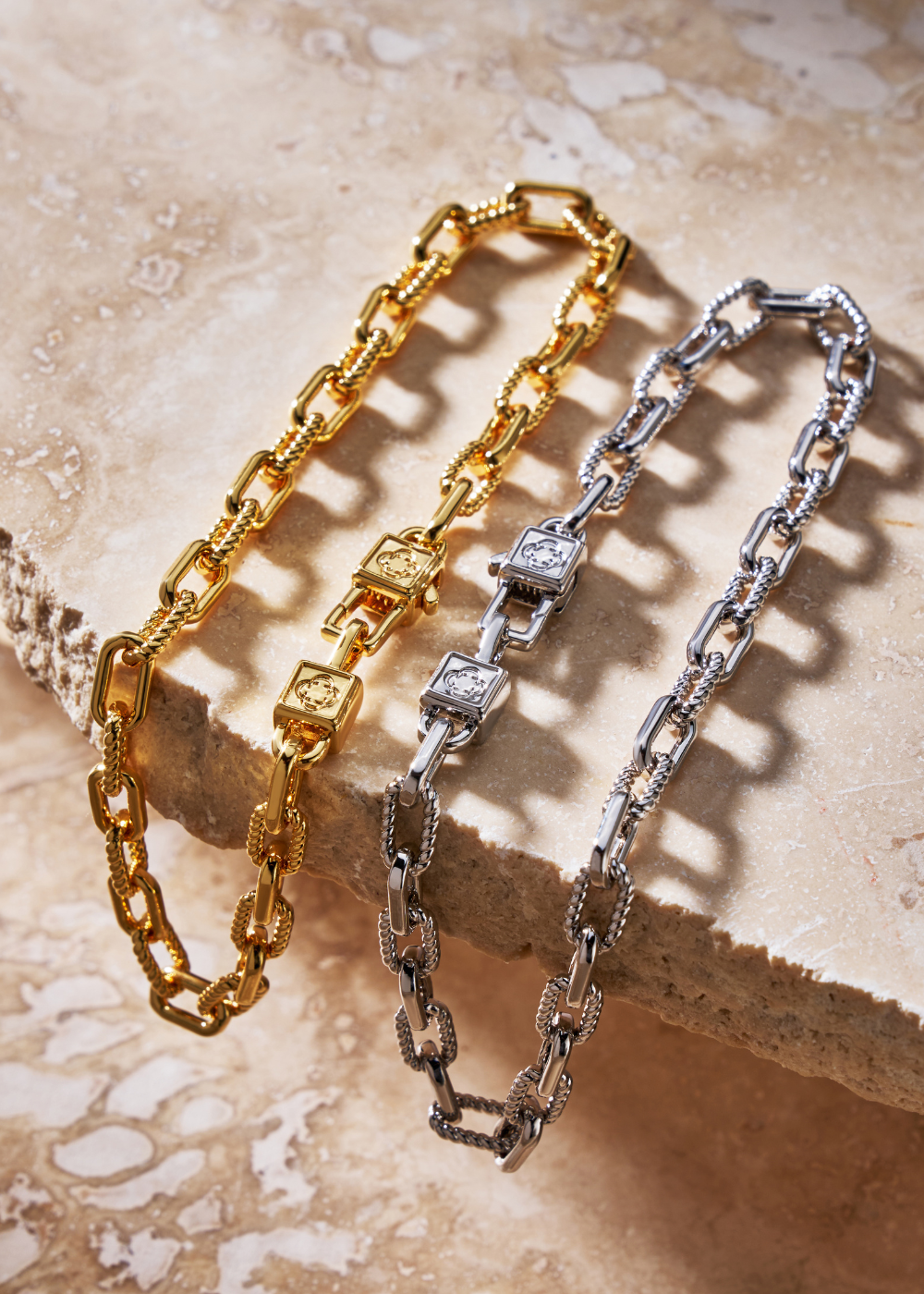
Clasps and edges take the most contact, which is where thin plating wears first. Featured: the 6mm Cuban bracelet.
Green skin is copper. It's copper in the base metal reacting with the acids in your skin. It's harmless and it washes off, but it tells you the plating has worn through in that spot, and no amount of cleaning will fix it.
Gold plated over stainless steel is a different thing entirely. Steel doesn't rust, corrode or tarnish, and there's no copper in it to mark your skin, so even where the gold thins there's nothing underneath waiting to react. For how plating is made and what to look for, see what gold plated actually means. For how long it lasts, see how long gold-plated jewelry lasts.
Not for a long time, and when it does, it's the silver rather than the gold.
Gold vermeil isn't a word a brand can use loosely. It means a solid sterling silver base with a layer of gold at least 2.5 microns thick, five times the thickness of standard plating, and the gold is almost always 18K. Sterling silver tarnishes naturally, but as long as the gold on top is intact, you won't see it.

Gold vermeil: a thick layer of 18K gold over solid sterling silver. Featured: the 3mm Rope chain in 18ct gold vermeil.
After years of heavy wear, if the gold wears thin enough in one spot to expose the silver, that spot can darken. It takes far longer than standard plating because there's so much more gold in the way, and the base is a precious metal rather than brass. Our guide to 18K gold vs gold vermeil compares the two constructions side by side, and does silver tarnish explains what's happening underneath.

The silver underneath only matters if the gold wears through. Featured: the 3mm Wheat chain in 18ct gold vermeil.
If you don't know what a piece is made of, three checks narrow it down quickly:
It depends which range, so here's exactly how each one is built.
Our 18K gold pieces are real 18K gold over a solid 316L stainless steel core, with a layer of rhodium between the two rather than the nickel used across much of the industry. The steel doesn't rust, corrode or tarnish, so there's no reactive base metal waiting underneath and no copper to mark your skin. Our 18K gold over a stainless steel core doesn't rust, tarnish or fade.

18K gold over stainless steel: nothing underneath to tarnish. Featured: the North Star pendant.
Our 18K gold vermeil is real 18K gold over solid sterling silver, with the thick 2.5-micron layer that vermeil requires. It holds its color for years, and it's the more traditional fine-jewelry route for anyone who wants a precious metal under the gold.
Our 925 sterling silver range will tarnish over time, like any real silver, and cleans back to new. That's the metal behaving normally rather than a fault.
One habit still matters for every gold piece: take it off for pools, hot tubs and the sea. Chlorine and salt water shorten the life of any gold surface, so the gold lasts longer if you do. Our guide to whether gold-plated jewelry can get wet has the detail.
Whatever type of gold you own, the same few habits keep it bright:

A wipe with a soft cloth after wearing does most of the work. Featured: the 3mm Figaro chain.
For step-by-step methods by type, see how to clean gold jewelry, how to clean gold-plated jewelry and how to clean a gold chain. Rings take the most wear of anything you own, so they get their own guide: how to clean rings.

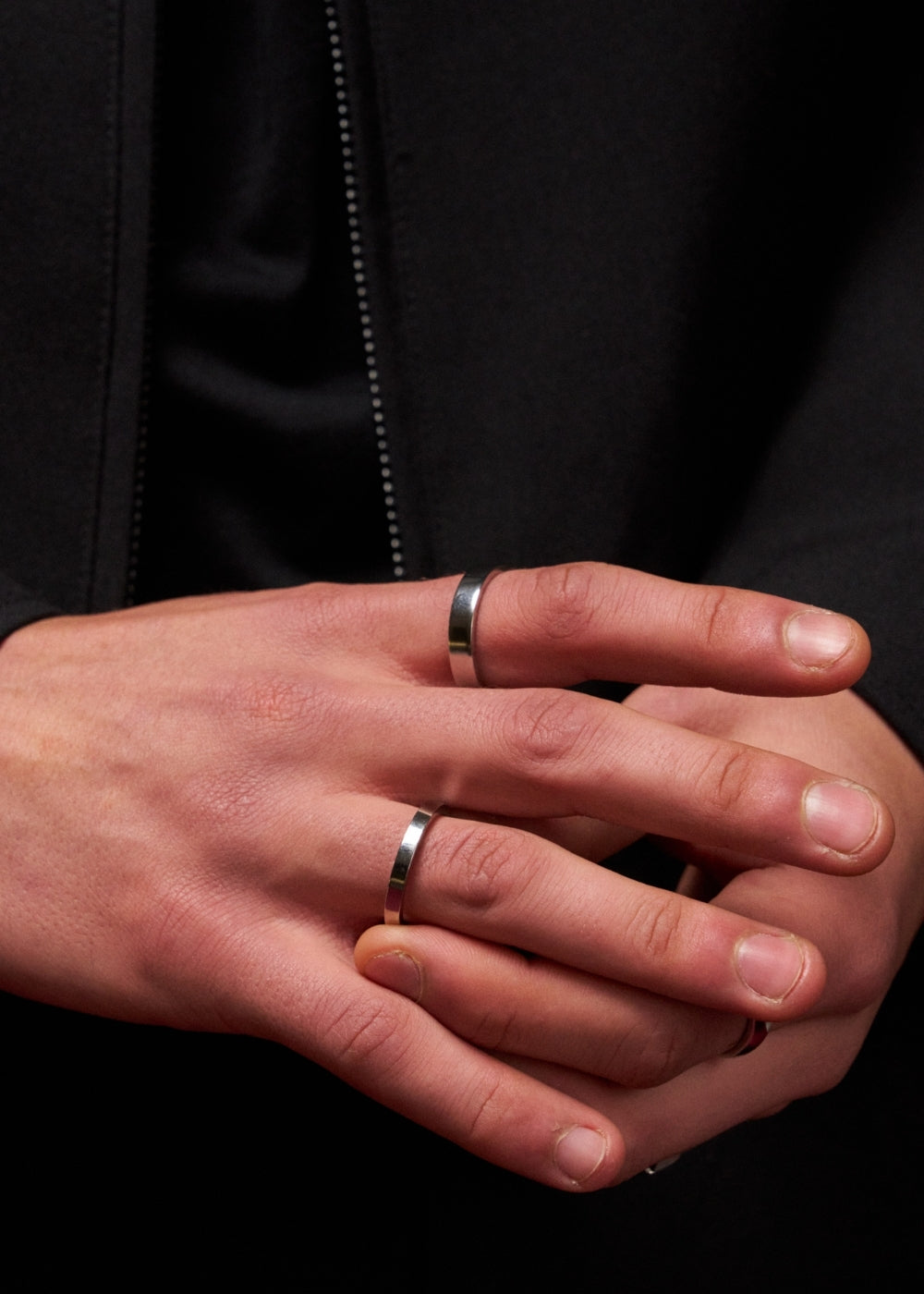
Rings take more wear than anything else you own. Featured: the Square Signet Ring.
Pure gold doesn't tarnish at all. It's one of the least reactive metals there is. Solid gold jewelry is an alloy, gold mixed with metals such as copper and silver, and lower-karat gold can dull very slightly over years of wear. It's slow and subtle, and it cleans off.
Solid 18K gold is 75% gold, so it resists tarnish well and changes very little over years of wear. 18K gold plating is the same gold in a thin layer, and whether that piece dulls depends on the metal underneath it, not on the gold.
It depends on what's under the gold. Plating over brass or copper can tarnish and discolor, often within months, once the thin gold layer wears through at the clasp and edges. Gold plated over stainless steel doesn't, because steel doesn't rust, tarnish or react with skin.
Only if there's copper underneath and the plating has worn through. Green skin is copper in the base metal reacting with the acids in your skin. It's harmless and it washes off. A piece built on stainless steel won't do it, because there's no copper in the core.
The gold doesn't, but the sterling silver underneath can. Vermeil is at least 2.5 microns of gold over sterling silver, so it takes years of heavy wear before the silver shows through. If it does, that spot can darken, because sterling silver tarnishes naturally.
Years, with normal care. The thick gold layer is what gives it that life: it has to wear through before anything changes. Keep it away from chlorine and harsh chemicals, and wipe it after wearing, and it holds its color far longer than standard plating.
Our 18K gold over a stainless steel core doesn't rust, tarnish or fade. Our 18K gold vermeil is solid sterling silver under a thick gold layer, so it holds its color for years, and our 925 sterling silver range will tarnish over time, like any real silver, and cleans back to new.
No. Gold can't rust, because rust is iron oxide and gold contains no iron. A gold-plated chain over stainless steel won't rust either. What people call rust on a cheap gold chain is usually a brass or copper base discoloring where the plating has worn away.
If it's dirt, yes: a wash in warm water with a drop of mild soap and a soft cloth brings back the shine. If the plating has worn through, no. Cleaning can't put gold back, and harsh polishing only takes more off. That's the point where a piece needs replating or replacing.
Solid gold, vermeil and gold over a stainless steel core are all fine in the shower, as long as you dry them afterwards. Take gold off for pools, hot tubs and the sea, because chlorine and salt water shorten the life of any gold surface. Keep cheap plated pieces dry altogether.
If a gold piece has ever let you down, the gold was rarely the problem. It was the metal underneath a thin layer of it. Choose gold over a core that doesn't react, look after the surface, and it stays bright for years.
Explore our men's gold chains, or see the gold vermeil collection.
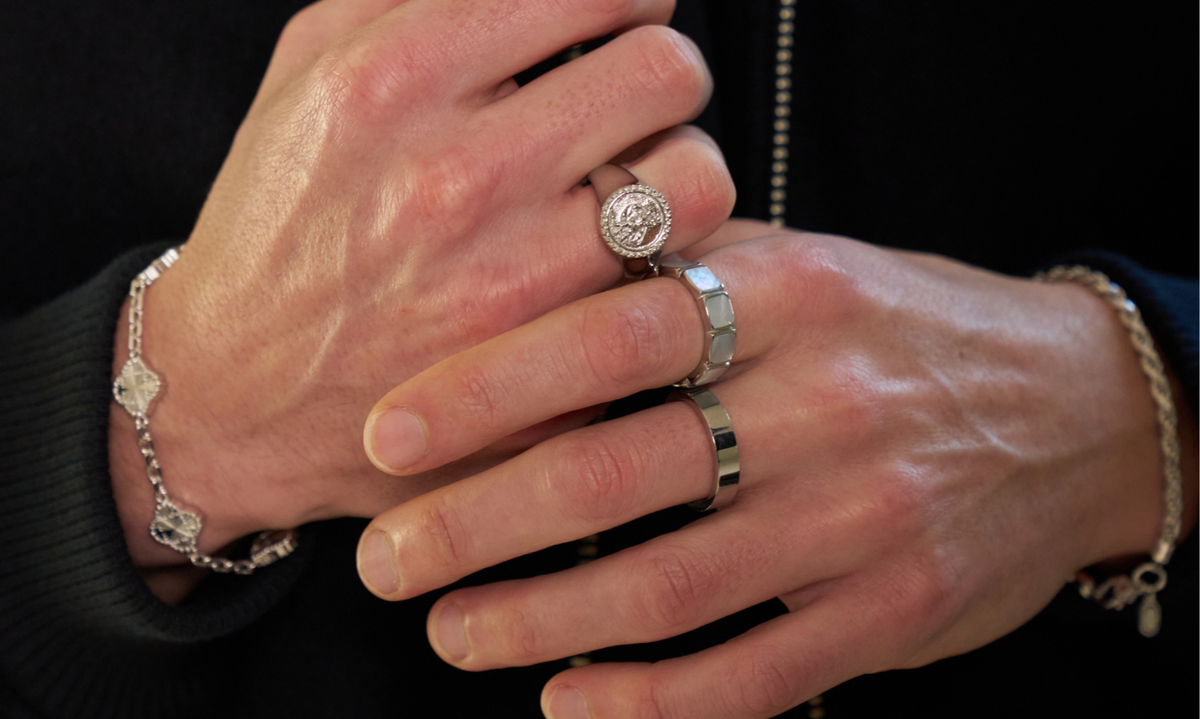
Is Silver Hypoallergenic? Sterling, Nickel and Sensitive Skin
Is sterling silver safe for sensitive skin? For most people, yes. Here's what causes a reaction, why nickel is usually to blame, which metals are kindest to sensitive skin, and what our pieces are ...
Read more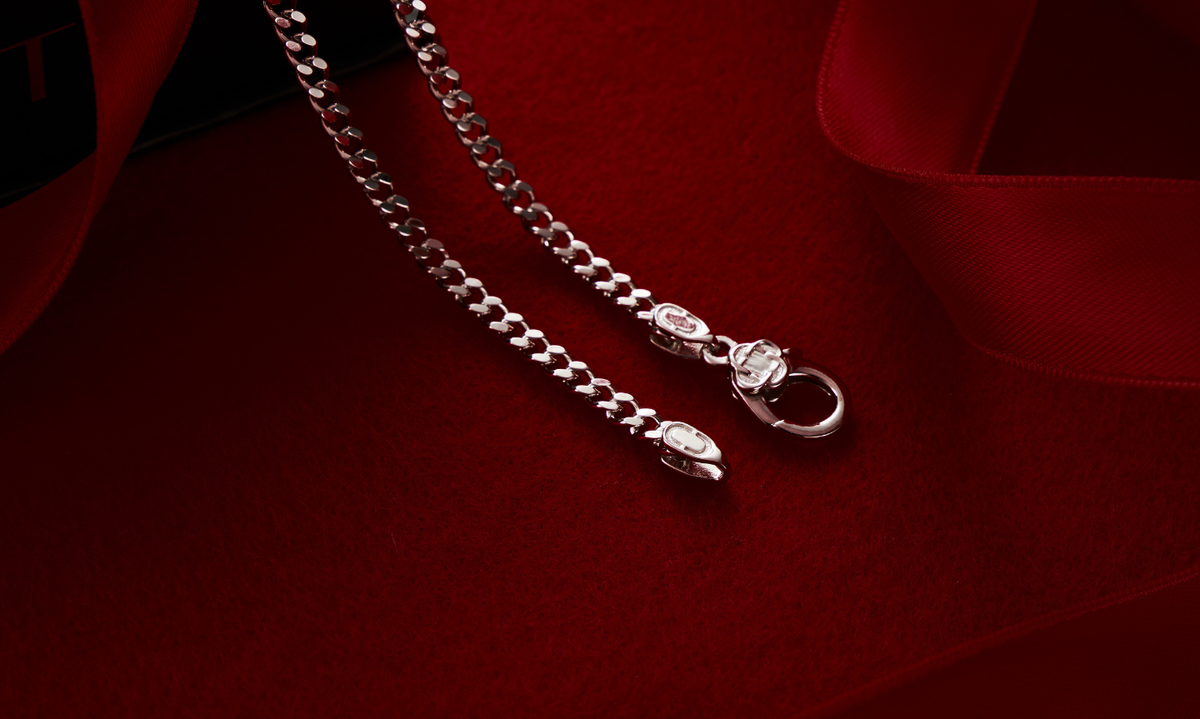
Does Silver Tarnish? What It Means and What It Doesn't
Yes, sterling silver tarnishes, and it's supposed to. Here's why it happens, which metals tarnish and which can't, how fast to expect it, and why tarnish proves nothing about whether silver is real.
Read more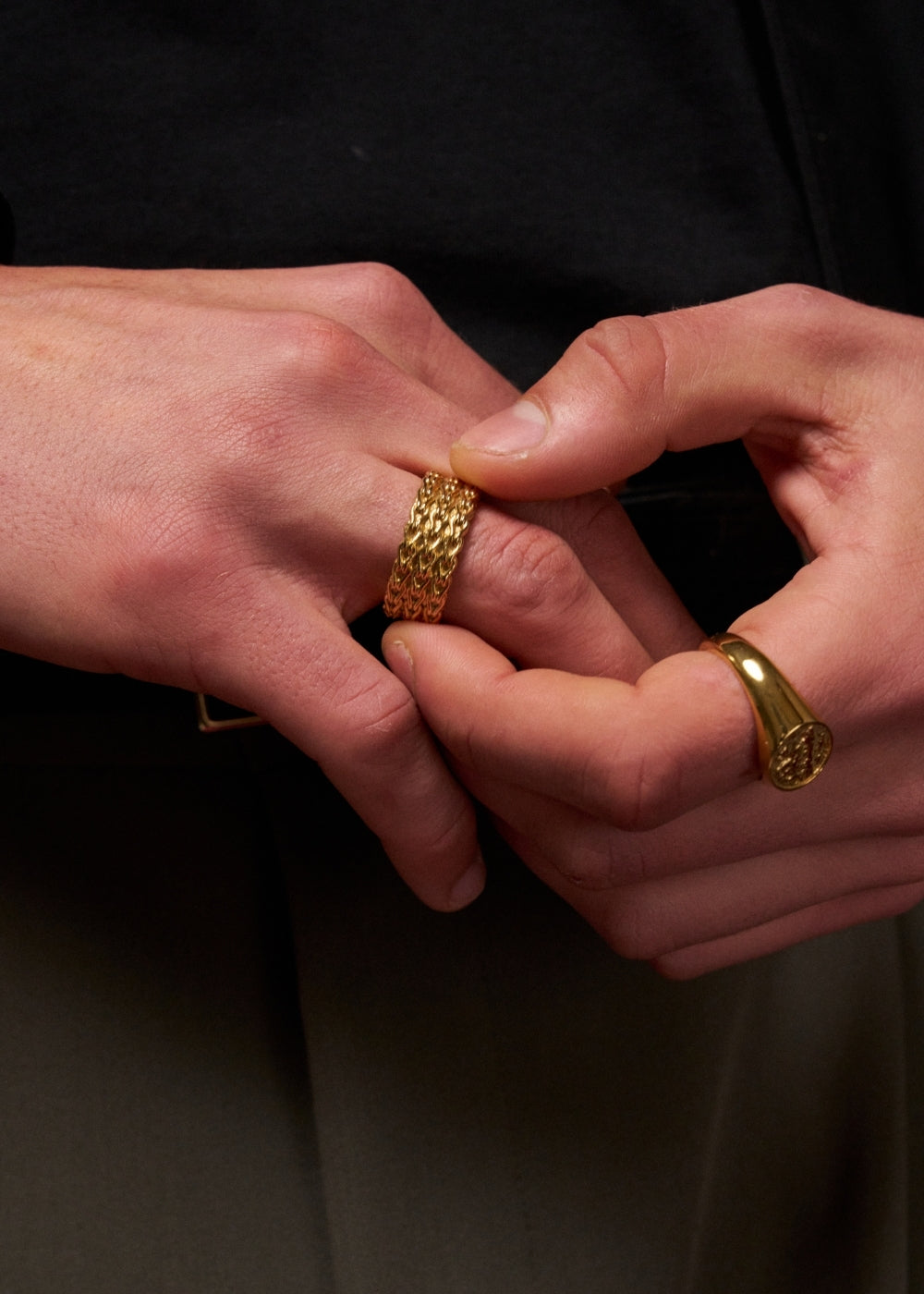


Leave a comment
This site is protected by hCaptcha and the hCaptcha Privacy Policy and Terms of Service apply.