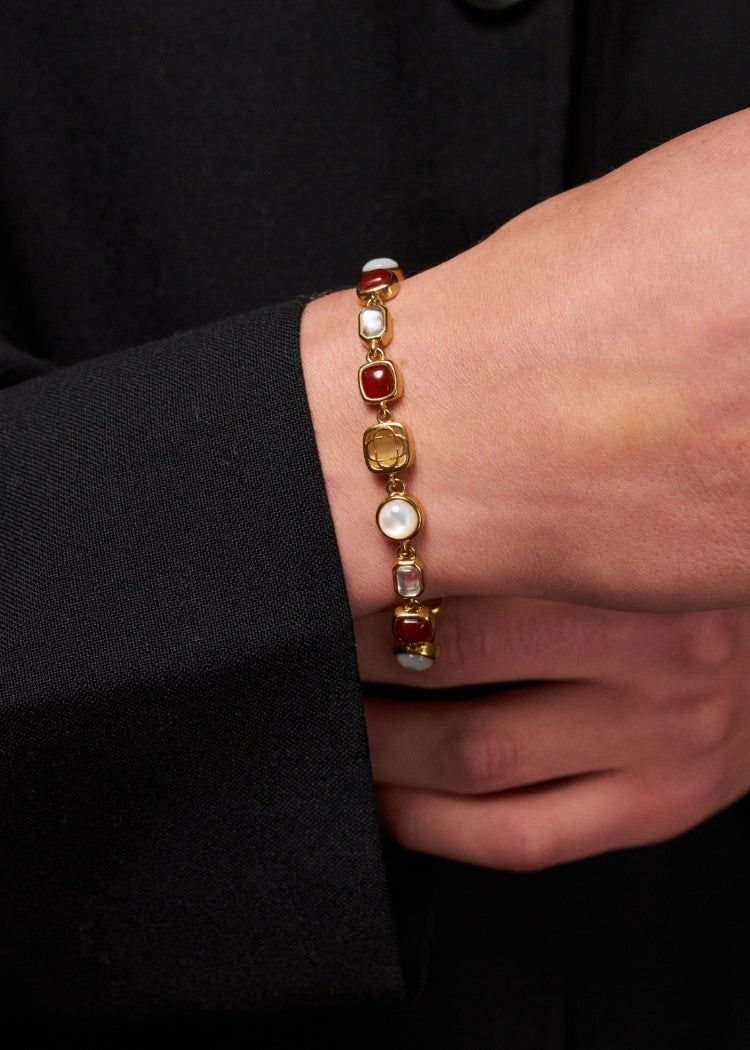
GEMSTONE BRACELETS
SHOP NOW



Cart
Your cart is empty
Your gifting options
Make your gift extra special with our luxury packaging options. Select a gift bag, gift box or a combination to create the perfect presentation.

Luxury Gift Box, Gift Bag & Wrapping Kit ($8.99)
Includes: CRAFTD Luxury Gift Box, Gift Bag, Tissue Wrapping Paper & Ribbon

Meaning Card ($2.99)
Add more meaning to your gift with a meaning card included with your order.
15 variations available

Luxury Gift Box ($5.99)
Choose your option
To My Boyfriend

To My Husband

To My Soulmate

To My Son

To My Grandson

To My Brother

To My True Friend

To My Dad

A Symbol Of Strength

A Symbol Of Faith

A Symbol Of Protection

A Symbol of Luck

A Symbol Of Safe Travel

A Symbol Of Self Belief

A Symbol Of Adventure
There isn't a difference, in the way the question assumes. Sterling silver is silver.
It's a grade of it: 92.5% pure, with the remaining 7.5% usually copper. So you're not choosing between two competing metals, the way you would between gold and platinum. You're looking at one metal and a decision about how pure it is.
That sounds like a technicality and it isn't, because the moment you understand it, every other silver question gets easier. Below we'll cover why pure silver isn't used, what the grades actually are, the "silvers" that contain no silver at all, and the American standard that came before sterling.
Jump to:
Fine silver, the pure stuff at 99.9%, is beautiful and nearly useless for anything you'd wear.
It's soft enough to bend out of shape in a pocket. It scratches if you look at it wrong. It won't hold a clasp under tension or keep a stone in a setting, because the metal gives before the design does. Bullion is made from it precisely because bullion doesn't have to survive anything.
So it gets alloyed. Add 7.5% copper and you get a metal that's hard enough to make a chain from, holds its shape, takes a polish and keeps it. The color barely changes. The value barely changes. What changes is that it becomes usable.
That's the whole reason sterling exists, and it's why the comparison people are reaching for isn't really a comparison. Sterling isn't a cheaper version of silver. It's the version that works.
Silver purity is measured in parts per thousand, which is why the numbers look like 925 rather than 92.5%. Same figure, different notation.
| Name | Fineness | Silver content | Where you meet it |
|---|---|---|---|
| Fine silver | 999 | 99.9% | Bullion and some artisan pieces. Too soft for anything that takes wear. |
| Britannia | 958 | 95.8% | A British standard, occasionally seen on imported pieces. |
| Sterling | 925 | 92.5% | The jewelry standard, worldwide. What 925 on a clasp means. |
| Coin silver | 900 | 90% | Antique American pieces. Marked COIN or 900. See below. |
| Continental | 800 | 80% | Older European silver. Still silver, just a lower grade. |
| Nickel silver | 0 | None at all | Also sold as German silver. Contains no silver whatsoever. |
Two things worth pulling out of that table.
Sterling won globally, and not by accident. 92.5% is the point where you've added enough copper to make the metal properly durable without adding so much that the color shifts or the value drops noticeably. Higher grades like Britannia are softer; lower grades like Continental 800 start to look and behave differently. Sterling is the compromise that turned out to be right, and it has held for centuries.
And the last row isn't a grade at all. More on that next, because it's where people get caught.
Here's the part that ties the whole subject together, and almost nothing on this topic says it out loud.
The copper that makes sterling usable is also the reason it tarnishes.
Pure silver barely reacts. It's the copper in the alloy that reacts readily with sulfur compounds in the air, and that reaction is what forms the dark layer people mistake for dirt or damage. So the 7.5% doing the structural work is the same 7.5% creating the maintenance.
Which means the trade-off is unavoidable rather than a design flaw. A softer, purer silver would tarnish less and bend in your pocket. A harder, less pure one would hold its shape better and tarnish faster. Sterling sits where it does because that's the point at which both problems are small enough to live with.
It also explains two things people find confusing. Sterling that never tarnishes isn't sterling, which is why "tarnish-free silver" in a listing is either plated, steel, or coated in something. And tarnish is evidence rather than a fault, which is why the white cloth test works: the black mark means the copper is doing what copper does, in metal that's genuinely 92.5% silver.
Some makers use modified alloys, substituting part of the copper for germanium or other metals to slow tarnishing. Those are still sold as sterling because they're still 92.5% silver, and the 7.5% is not specified by the standard. It's a real improvement rather than a marketing claim, though it costs more and it slows tarnish rather than preventing it.
Three terms use the word silver while containing none of it, and knowing them is worth more than knowing any grade.
Nickel silver, also sold as German silver, is a copper-nickel alloy. It's named for its color and nothing else. There is no silver in it whatsoever. It's a perfectly good material for some purposes, and it's a bad one against skin if you react to nickel, which plenty of people do.
Silver tone or silver finish is a color description. It's the jewelry equivalent of calling something "wood effect". No claim about the metal is being made, and none should be read into it.
Silver plated is the genuinely confusing one, because it does contain silver. A thin layer of it, bonded to a base metal. The silver is real as far as it goes, but it's a surface rather than the object, and it wears through at the points that take the most contact. Once it does, what shows is whatever was underneath. We've covered how to separate plated from sterling in silver plated vs sterling silver.
The useful rule: a number tells you something, a word usually doesn't. 925 is a claim you can check. "Silver tone" is a color.
Worth knowing if you're American, because it explains a mark you'll meet on anything inherited.
Before refined bullion was easy to come by, American silversmiths worked from what they had, which was coins. They melted them down. US coinage was 90% silver, so the pieces that came out were 90% too, and that became the American standard in practice rather than by decree. It's why you'll find antique American silver marked COIN, PURE COIN, DOLLAR or simply 900.
It was also inconsistent, because coins didn't only come from the United States. Foreign coinage of varying purity went into the pot too, so actual coin silver from that era can run anywhere from around 750 to 900.
That changed around 1868. The Nevada silver discoveries a few years earlier had transformed the supply, refined silver became available at scale, and the American industry adopted the sterling standard that Britain had been using for centuries. Everything made here since is 925.
So if you have an old American piece that tests as silver but isn't marked 925, it isn't fake. It's probably older than 1868, and it's a slightly different standard rather than a lesser one.
This comes up more than it used to, and it's usually asked as though recycled and sterling were alternatives. They aren't, and they're not even the same kind of thing.
Sterling describes purity. Recycled describes origin. A piece can be both, and most recycled silver on the market is recycled sterling.
The part that matters: refined silver is chemically identical regardless of where it came from. An atom of silver reclaimed from old cutlery or electronics is indistinguishable from one dug out of a mine last year. Once it's been through refining there is no test that can tell them apart, because there is nothing to tell apart. Recycled sterling at 925 is exactly as pure, exactly as durable and exactly as valuable as newly mined sterling at 925.
So the choice is an environmental one rather than a quality one, and anybody selling recycled silver at a premium on quality grounds is selling you a story. Anybody selling it on environmental grounds has a real argument, since mining silver is considerably more damaging than reclaiming it.
Start with the stamp. 925 or STERLING means sterling silver. 900 or COIN means American coin silver. 999 means fine silver. No stamp at all means run a test.
In the US a stamp is the maker's own claim rather than an independent verdict, because there are no assay offices here. What the National Stamping Act requires is that anyone applying a quality mark also applies their registered trademark or name, so the name beside the number is the part that makes it accountable. The symbols stamped on jewelry covers the rest of the marks.
Beyond the stamp, the best home test is an ice cube. Silver has the highest thermal conductivity of any metal, so ice melts on it visibly faster than on anything it's likely to be confused with. A magnet is the quickest way to rule silver out, since silver isn't magnetic. Our full guide to telling whether silver is real goes through every test, what each one proves, and what none of them can.
And once you know what you've got, how to clean silver chains covers the tarnish, which is the one job sterling actually asks of you. Keeping sterling looking new covers storage.
There isn't one in the way the question implies. Sterling silver is silver. It's a grade of it, 92.5% pure with the rest usually copper, and it exists because pure silver is too soft to make jewelry from. So you're not choosing between two metals, you're looking at a specific alloy of the same one.
Yes, and it's the standard for jewelry everywhere. 92.5% pure, stamped 925. The 7.5% that isn't silver is there to make the metal hard enough to survive being worn, not to dilute it.
No. They're two names for the same thing. 925 is the fineness, meaning 925 parts silver per thousand, and sterling is the name that fineness has carried for centuries.
It's too soft. Fine silver at 99.9% bends out of shape, scratches easily and won't hold a setting or a clasp. Alloying it with a small amount of copper fixes that without meaningfully changing the color or the value.
An older American standard at 90% silver, from when silversmiths here worked from melted coins rather than refined bullion. The US industry moved to sterling around 1868, after the Nevada silver discoveries changed the supply. If you have an antique American piece marked COIN or 900, that's what it is.
No, and the name is the problem. Nickel silver, also sold as German silver, is a copper-nickel alloy that contains no silver at all. It's named for its color. If you react to nickel, it's also the last thing you want against skin.
They aren't opposites. Recycled describes where the silver came from; sterling describes its purity. Recycled sterling silver is 92.5% silver exactly like newly mined sterling, because refined silver is chemically identical whatever its origin. The choice is environmental rather than about quality.
Yes, and it's a sign it's genuine. Silver reacts with sulfur compounds in the air to form a dark surface layer. It polishes off in a couple of minutes and comes back eventually. Nothing that never tarnishes at all is sterling.
Our 925 Collection is genuine sterling silver. Most of our other silver-tone pieces are rhodium-finished stainless steel, which is not silver and isn't sold as such. We've answered that question in full, including how to check any piece, in our guide to telling whether silver is real.
Different things. Sterling is a genuine precious metal that tarnishes and polishes back. Steel isn't precious and has no material value, but it doesn't tarnish, corrode or fade and it handles daily wear better. One is about the metal, the other is about the upkeep.
Sterling silver is silver. It's the grade that made silver wearable, it's been the standard for centuries, and 925 on a clasp is the shortest version of everything on this page.
What's worth more of your attention is the other direction: the things called silver that aren't. A number you can check beats a word you can't, every time.
Have a look through the 925 Collection if you're after genuine sterling, or silver or gold if you're still deciding which way to go.

How Much Does it Cost To Resize a Ring?
Ring feeling loose, or sliding past your knuckle? Here's how to tell for sure, what it costs to resize (when that's even possible), and what to do if the size just isn't right.
Read more
Can Gold-Plated Jewelry Get Wet? Showers, Pools and the Sea
Can you shower in gold-plated jewelry, or swim in it? It depends on what's under the gold. Here's how each common metal handles showers, pools and the sea, and exactly where our own pieces stand.
Read more

Leave a comment
This site is protected by hCaptcha and the hCaptcha Privacy Policy and Terms of Service apply.