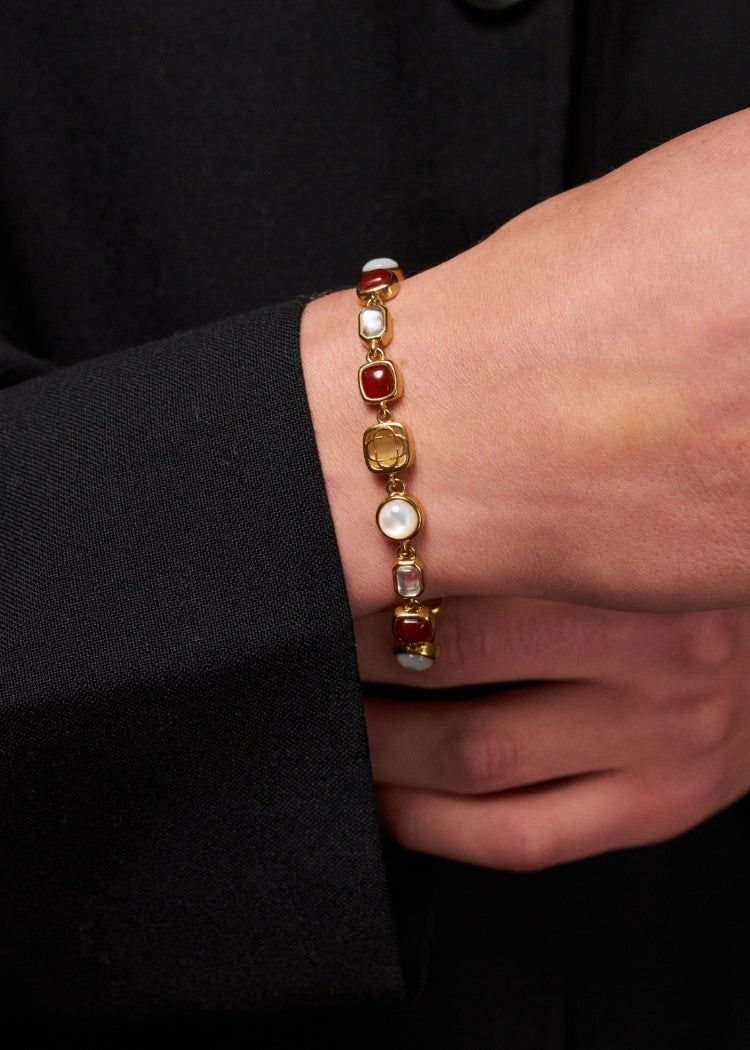
GEMSTONE BRACELETS
SHOP NOW



Cart
Your cart is empty
Your gifting options
Make your gift extra special with our luxury packaging options. Select a gift bag, gift box or a combination to create the perfect presentation.

Luxury Gift Box, Gift Bag & Wrapping Kit ($8.99)
Includes: CRAFTD Luxury Gift Box, Gift Bag, Tissue Wrapping Paper & Ribbon

Meaning Card ($2.99)
Add more meaning to your gift with a meaning card included with your order.
15 variations available

Luxury Gift Box ($5.99)
Choose your option
To My Boyfriend

To My Son

To My Grandson

To My Brother

To My True Friend

To My Dad

A Symbol Of Strength

A Symbol Of Faith

A Symbol Of Protection

A Symbol of Luck

A Symbol Of Safe Travel

A Symbol Of Self Belief

A Symbol Of Adventure
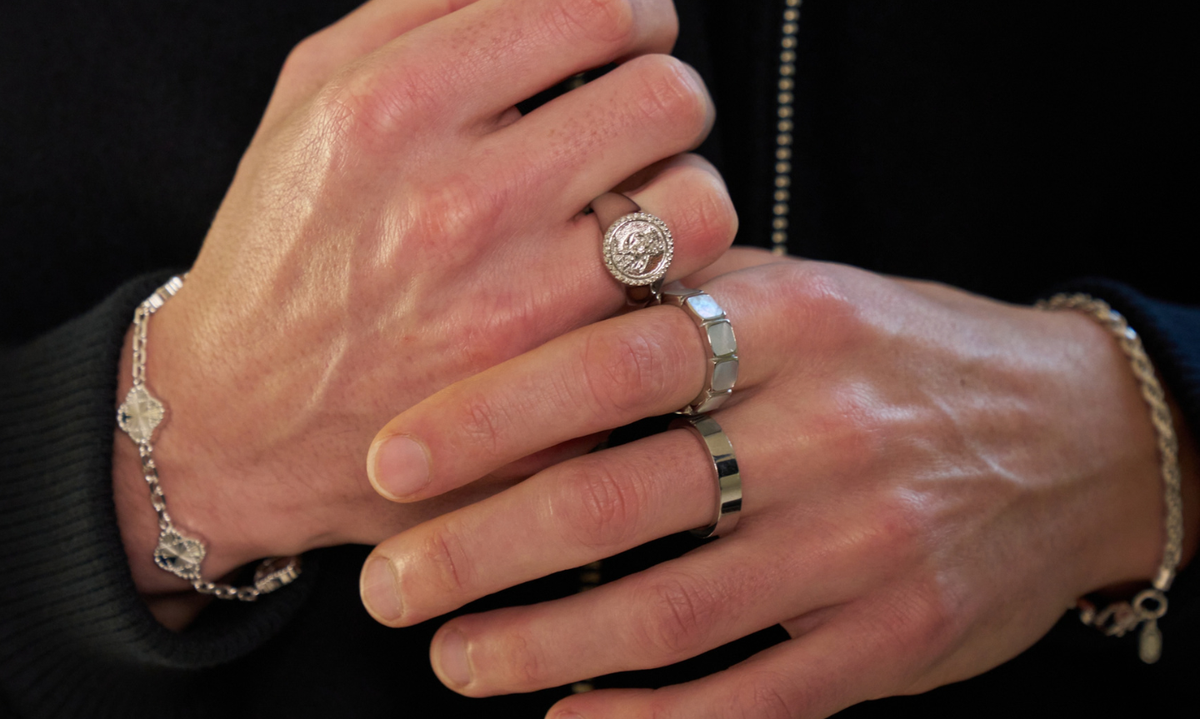
Two questions bring people here, so here are both answers up front.
Can you tell if silver is real at home? Yes. Check the stamp, then put an ice cube on it. Silver conducts heat better than any metal on earth, so ice melts on it visibly faster than on anything else. That test costs nothing and is harder to fake than a stamp.
Is CRAFTD real silver? Partly, and we'd rather tell you straight than let you find out later. Our 925 Collection is genuine sterling silver. Most of our other silver-tone pieces are solid 316L stainless steel finished in rhodium, which is not silver. Both are stated on every product page, and the section below explains why we build it that way.
Jump to:
People ask us this a lot, which is fair, so here's the complete answer rather than a comfortable one.
Our 925 Collection is genuine sterling silver. 92.5% pure silver, stamped 925, and it behaves exactly as sterling should: it will tarnish over time and polish straight back, because the silver goes all the way through. It sits in the sterling silver collection.
Most of our other silver-tone pieces are not silver. They're a solid 316L stainless steel core finished in rhodium. Our own product pages say so in the materials section, on every piece, in those words. Steel is silver-colored rather than silver, and we don't describe it as anything else.
So if the question is whether you're being sold sterling when you thought you were, the answer is no, because it's written on the page you bought from. And if the question is whether we make real silver at all, the answer is yes, and it's a specific collection you can go and look at.
How to check any piece of ours in ten seconds: open the product page and read the Our Materials section. It names the metal outright. Sterling pieces say 925 sterling silver. Steel pieces say 316L stainless steel finished in rhodium. There's no third category and nothing is implied.
Worth explaining, because "it's not silver" sounds like a downgrade and in daily wear it usually isn't.
Sterling silver is a genuine precious metal and it has one real drawback: it tarnishes. That's not a fault, it's chemistry, and it happens to every piece of sterling ever made. Polishing it back takes two minutes, but it recurs, and it recurs faster on something worn against skin every day.
316L stainless steel doesn't tarnish, corrode or fade. Finished in rhodium it reads as bright silver, and it survives showers, sweat and years of contact without asking anything of you. It's also well tolerated by sensitive skin, which matters more than most people realize on a piece worn continuously.
So the two aren't competing on the same axis. Sterling is the choice if you want a precious metal and don't mind the upkeep. Steel is the choice if you want the look with none of it. Neither is a substitute for the other and we sell both on purpose.
What we won't do is call steel silver, which is exactly the thing that makes people ask this question in the first place.
Look on the clasp, the inside of a band, or a small tag near the fastening. Genuine sterling carries 925, sometimes written .925, and occasionally the word STERLING spelled out.
925 means 92.5% pure silver, with the remaining 7.5% usually copper for strength. Pure silver is too soft for jewelry, so nobody makes it from pure silver, and 925 is the worldwide standard rather than a compromise.
What that stamp means in America is worth knowing. There are no assay offices here and no compulsory independent testing, so a stamp is applied by the maker rather than by a third party. What the law requires is accountability for it: under the National Stamping Act, anyone applying a quality mark has to apply their registered trademark or their name to the same piece. So a 925 stamp sitting on its own, with no maker's mark next to it, is missing the part that makes it mean something. The symbols stamped on jewelry covers the full set of marks.
No stamp at all doesn't automatically mean it isn't silver, since very old pieces and some handmade ones were never marked. But on anything modern it's a reason to run the tests below.
Put an ice cube on the piece and another on a coin or a steel spoon. The one on silver will melt noticeably faster.
This works because silver has the highest thermal conductivity of any metal, higher even than copper. It pulls heat out of the room and into the ice far quicker than anything it's likely to be confused with. It's non-destructive, needs nothing you don't already own, and it tests a physical property rather than a claim someone stamped on.
Silver isn't magnetic. Hold a magnet to the piece and nothing should happen.
If it pulls, there's ferromagnetic metal in there, which on a silver-colored piece usually means a steel or nickel-bearing core under plating. This is excellent for ruling silver out and useless for confirming it, since plenty of non-magnetic metals aren't silver either.
Rub the piece firmly with a clean white cloth. A black mark on the cloth is a good sign.
That mark is tarnish lifting off, and tarnish is silver reacting with sulfur in the air. Base metals and steel don't do it. So the thing that looks like the piece is dirty is actually the strongest everyday evidence that it's genuine.
Rub it between your fingers for a few seconds and smell them. Silver has no odor. A distinct metallic or coppery smell suggests a copper-heavy base alloy rather than sterling.
It's the least precise of the five, but it takes two seconds and it's occasionally decisive.
Silver is denser than steel or brass, so a sterling piece feels heavier than a plated one of the same size. This only works if you have something to compare against, but if you own one piece you're confident about, it becomes a useful reference for everything else.
| Test | What real silver does | How much to trust it |
|---|---|---|
| The stamp | Carries 925, .925 or STERLING somewhere on it | High as a starting point, but a stamp is a claim rather than a test. |
| Magnet | Isn't attracted to a magnet at all | High for ruling things out. It won't confirm silver, but a pull means there's ferromagnetic metal in there. |
| Ice | Melts ice visibly faster than any other metal | High, and the best home test there is. Silver has the highest thermal conductivity of any metal. |
| White cloth | Leaves a black mark when rubbed | Good. That mark is tarnish lifting off, and only genuine silver tarnishes that way. |
| Smell | Has no smell at all | Moderate. A metallic or coppery smell points to a base alloy underneath. |
| Weight | Feels dense for its size, heavier than steel or brass | Moderate, and only useful if you have something to compare it against. |
Two honest limits, because most articles on this leave them out.
None of them measure purity. They can tell you something is silver rather than steel. They can't tell you it's 92.5% rather than 80%. Only an acid test or an XRF scanner does that, and both are jeweler's tools. For anything you've spent real money on, that appointment is worth making.
And plating defeats most of them. A thick silver plating over a non-magnetic base can pass the magnet test, leave a mark on a cloth and feel reasonably heavy. The giveaway is wear: look at the clasp, the edges, and anywhere that takes constant contact. Plating goes there first, and when it does you'll see a different color underneath. Sterling wears evenly and stays the same color all the way down.
Then you're dealing with a different material, and the question changes from "is it real" to "how much is on there and what's underneath".
Silver plated means a thin layer of silver bonded to a base metal. The silver is genuine as far as it goes, but it's a surface rather than the object, and it wears through at the points that take the most contact. Once it does, what shows is the base metal, and if that base contains copper it can mark skin.
We've covered how to separate the two properly in silver plated vs sterling silver, and if the question underneath yours is really what sterling is in the first place, the difference between silver and sterling silver takes that on.
For keeping genuine silver looking right once you've established that's what you have, how to clean silver chains covers the method and keeping sterling looking new covers storage.
Partly, and we'll tell you which is which. Our 925 Collection is genuine sterling silver. Most of our other silver-tone pieces are solid 316L stainless steel finished in rhodium, which is not silver and isn't sold as silver. Every product page states which one you're looking at under Our Materials.
Yes, in the 925 Collection, which is genuine sterling silver. Elsewhere in the range we use rhodium-finished 316L stainless steel, chosen deliberately because it doesn't tarnish and holds up to daily wear better than sterling does. Both are stated openly on the product pages.
Check for a 925 or sterling stamp first, then test it. The ice test is the most reliable thing you can do at home: silver conducts heat better than any other metal, so ice melts noticeably faster on it. A magnet is the quickest way to rule something out, since silver isn't magnetic.
Same three steps as any other piece. Look for the stamp on the clasp or a small tag, check it isn't drawn to a magnet, and rub it with a clean white cloth. A black mark on the cloth is tarnish, and tarnish means genuine silver.
No. Silver isn't magnetic, so a piece that pulls toward a magnet contains a meaningful amount of ferromagnetic metal, usually a steel or nickel-bearing core under plating. It's a reliable way to rule silver out, though it can't confirm it on its own.
Yes, and that's a sign it's genuine rather than a fault. Silver reacts with sulfur compounds in the air to form a dark surface layer. It polishes off in a couple of minutes and comes back eventually, which is simply what silver does.
The mark means 92.5% silver, and in the US anyone applying it must also apply their registered trademark or name under the National Stamping Act. But it's still the maker's claim rather than an independent test, so a 925 stamp with no maker's mark beside it is worth a second look.
Plated jewelry is a thin silver layer over a base metal, so the silver is only ever a surface and it wears through. Sterling is silver all the way down. Our guide to silver plated against sterling silver goes through how to tell them apart.
No, and nobody should tell you it does. Steel is silver-colored, not silver. What it offers instead is that it doesn't tarnish, doesn't corrode and is well tolerated by sensitive skin, which is why it's used so widely in men's everyday jewelry.
Yes, slightly, which is why it's a jeweler's tool rather than a home one. It removes a tiny amount of metal from an inconspicuous spot. For anything valuable it's worth the appointment, and for anything else the tests above will get you there.
Stamp first, ice cube second, and look at the wear points if anything still doesn't add up. That's most of what a jeweler would do before reaching for the acid.
If you want genuine sterling from us, it's the 925 Collection. If you want the silver look without the upkeep, that's the rhodium-finished steel, and now you know exactly which one you're buying.

What's the Best Way To Store Necklaces?
It's probably not news to you that taking care of jewelry helps it look its best. Still, it's a topic worth discussing when you're focusing on building out your collection with new pieces. Perhaps...
Read more
Gold Pendants: 13 Best Gold Pendants For Any Attire
Let's talk about your jewelry game. Perhaps you've been an avid jewelry collector for years—always thinking of what pieces you can add to make your ‘fits stand out and look dapper. On the other han...
Read more

Leave a comment
This site is protected by hCaptcha and the hCaptcha Privacy Policy and Terms of Service apply.