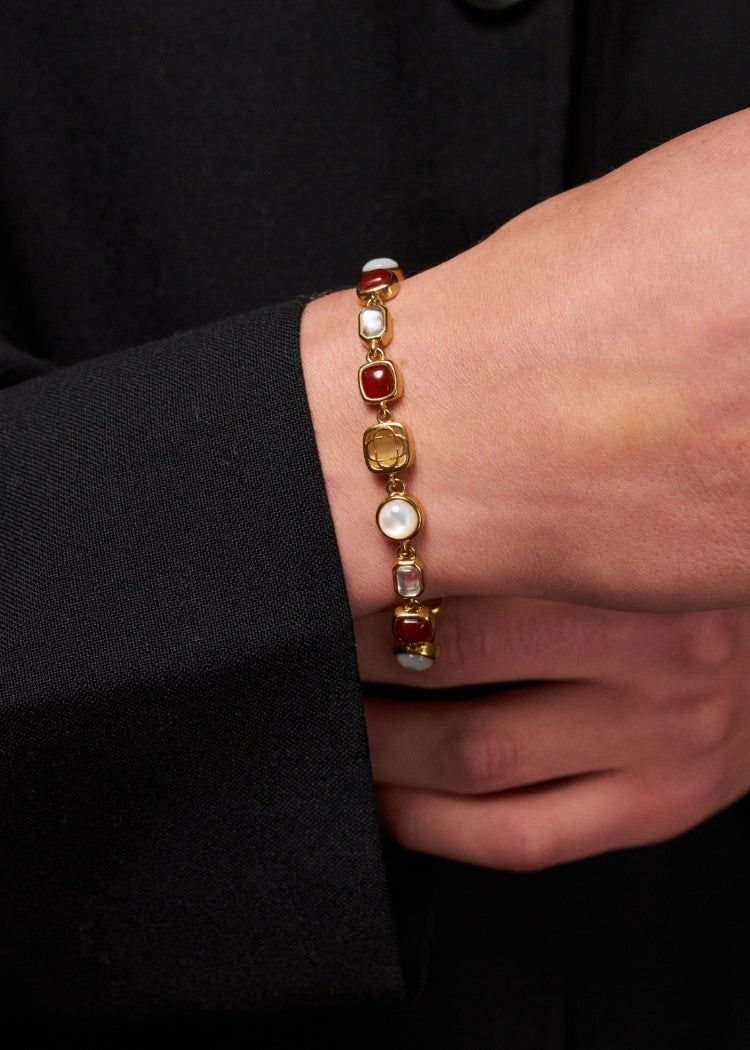
GEMSTONE BRACELETS
SHOP NOW



Cart
Your cart is empty
Your gifting options
Make your gift extra special with our luxury packaging options. Select a gift bag, gift box or a combination to create the perfect presentation.

Luxury Gift Box, Gift Bag & Wrapping Kit ($8.99)
Includes: CRAFTD Luxury Gift Box, Gift Bag, Tissue Wrapping Paper & Ribbon

Meaning Card ($2.99)
Add more meaning to your gift with a meaning card included with your order.
15 variations available

Luxury Gift Box ($5.99)
Choose your option
To My Boyfriend

To My Husband

To My Soulmate

To My Son

To My Grandson

To My Brother

To My True Friend

To My Dad

A Symbol Of Strength

A Symbol Of Faith

A Symbol Of Protection

A Symbol of Luck

A Symbol Of Safe Travel

A Symbol Of Self Belief

A Symbol Of Adventure
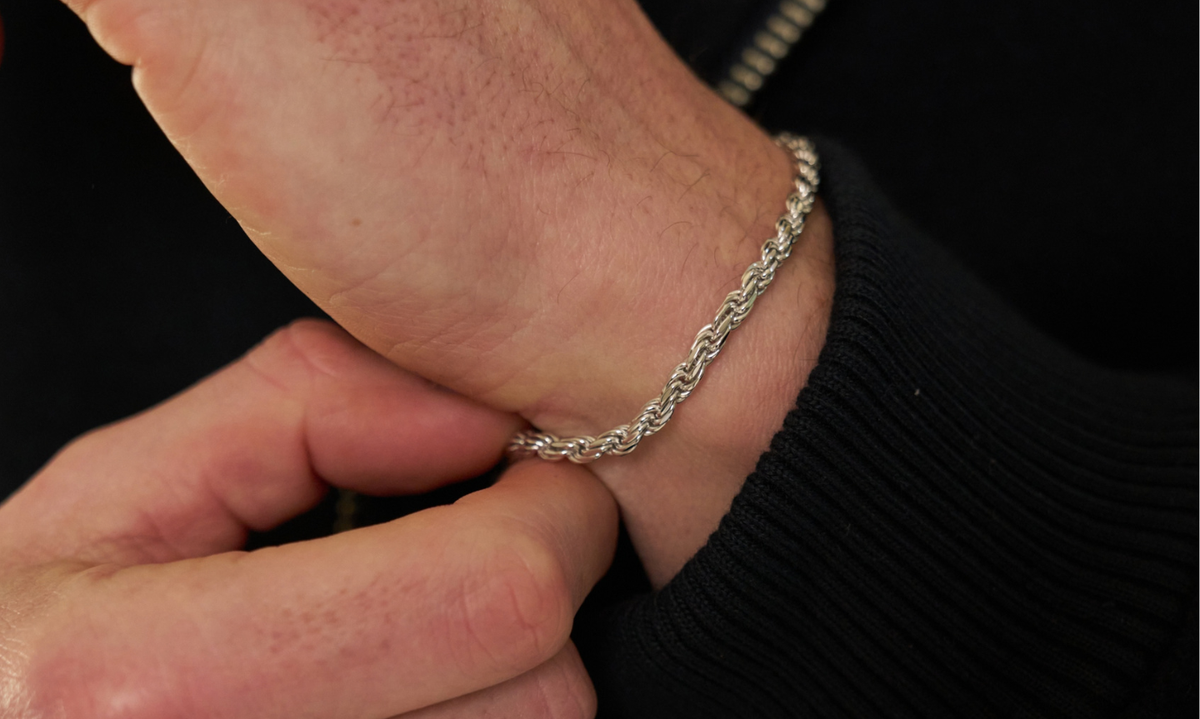
Sterling is silver all the way through. Silver plated is a thin layer of silver on top of something else.
Both are genuinely silver on the surface, which is why they're hard to tell apart in a photograph and easy to tell apart after a year of wearing them. Below we'll cover what each one is, the quickest ways to tell which you're holding, how to read the marks, and the thing about silver plating that American law leaves wide open.
Jump to:
A base metal with a thin layer of silver bonded to the outside of it, almost always by electroplating: the piece goes into a solution containing dissolved silver, a current runs through it, and silver deposits onto the surface.
The base underneath is usually copper, brass or nickel silver. That last one is worth knowing about, because nickel silver contains no silver at all. It's a copper-nickel alloy named for its color. So a piece marked EPNS is silver on the outside and, underneath, a metal with no silver in it whatsoever.
The silver in the coating is real silver. That part isn't a con. What makes plated pieces so variable is that nothing tells you how much of it is on there, and the answer ranges from a respectable layer that lasts years to a film you could wear off in a season.
Sterling is an alloy rather than a coating: 92.5% silver with the remaining 7.5% usually copper, mixed evenly through the metal. That's what the 925 stamp records.
It's alloyed because pure silver is too soft to make jewelry from, and 92.5% is the point where the metal becomes hard enough to hold a clasp and survive being worn without the color or value shifting. Cut a sterling chain in half and the inside looks exactly like the outside, which is the whole difference in a sentence. We've gone into the grades properly in the difference between silver and sterling silver.
Here's the part that explains why plated jewelry is so inconsistent, and almost nothing written on this subject mentions it.
In the United States the FTC's Jewelry Guides set real, checkable standards for solid silver. "Sterling" requires at least 925 parts per thousand. "Coin silver" requires at least 900. Under the National Stamping Act the marked fineness can only be off by four parts per thousand, or ten where there's solder involved. Those are tight numbers with penalties behind them.
For silver plating, there is no number at all. The rule is that all significant surfaces must carry a coating of silver "of reasonable durability", and that's the entire standard. No minimum thickness, no minimum weight, nothing you could measure and hold someone to.
Compare that to gold, where the same rulebook does give a figure: gold electroplate has to be at least 0.175 microns thick. That floor is famously low, low enough that meeting it proves very little, and we've written about why in what gold plated actually means. But it exists. On the silver side there's nothing to be low.
So "silver plated" is one of the least informative phrases in jewelry. Two pieces can carry the same words on the same shelf and differ by a factor of twenty in how much silver is actually on them. The only things that tell you anything are the price, the weight, and whoever made it.
Four checks, roughly in order of how much they'll tell you.
This settles most cases in five seconds. 925, .925, STERLING or STER. means solid sterling. EP, EPNS, EPBM or SILVER PLATED means coated. The full list is in the next section.
A word of caution though: in the US a mark is the maker's own claim, not an independent test, because there are no assay offices here. What the law requires is that anyone applying a quality mark also applies their registered trademark or name. So a 925 with a maker's mark beside it is worth considerably more than a 925 on its own.
This is the most reliable test there is, and it needs nothing but your eyes.
Look at the clasp, the edges, the back of a pendant, the inside of a band, anywhere that takes constant contact. On a plated piece those areas eventually show a different color underneath, usually warmer, pinkish or yellowish depending on the base. On sterling they just get shinier, because there's nothing to wear through.
A silver-colored piece that's gone patchy at the high points is plated. One that's gone evenly dark all over is sterling with tarnish on it.
Silver isn't magnetic. Neither is copper or brass, so this won't catch every plated piece. But plenty of plated jewelry is built on a steel or nickel-bearing core, and those will pull. A magnetic response rules sterling out immediately.
Sterling is denser than brass and considerably denser than a hollow plated piece. If you own one piece you're confident about, it becomes a reference for everything else. A chain that looks substantial and weighs almost nothing is telling you something.
For the full set of tests, including the ice test, which is the best home method for confirming silver rather than ruling it out, see how to tell if silver is real.
Most of the confusion on this subject lives in the abbreviations, so here they all are.
| Mark | What it means | Solid or plated? |
|---|---|---|
| 925, .925, STERLING, STER. | At least 92.5% silver throughout | Solid |
| 900, COIN, COIN SILVER | At least 90% silver. Usually antique American | Solid |
| EP | Electroplated | Plated |
| EPNS | Electroplated nickel silver. The base contains no silver at all | Plated |
| EPBM | Electroplated Britannia metal. A pewter-type base | Plated |
| A1, AA, triple plate | A maker's own quality claim, with no standard behind it | Plated |
| SILVER PLATED, SILVERPLATE | A silver coating over something else | Plated |
| No mark at all | Nothing is being claimed | Test it |
Two of those deserve a second look.
EPNS is the one that catches people, because it contains the word silver twice and describes an object that's mostly not silver. Electroplated nickel silver means a silver coating over a nickel silver base, and nickel silver is a copper-nickel alloy with none in it.
And A1 means nothing at all. It looks like a grade and it's a maker's own designation with no standard behind it, in the same family as "premium plated" on the gold side. If a piece leans on a term like that instead of a fineness number, the term is decoration. The symbols stamped on jewelry covers the whole vocabulary.
The coating is. The piece isn't.
That distinction matters more here than it does with gold, because the amounts involved are so different. A gold-plated piece at least has a legal floor under it. A silver-plated piece has none, so "real silver" can describe a layer thick enough to outlast you or one you could scratch through with a fingernail, and the phrase covers both.
The honest way to read it: plated jewelry is a base metal object with a silver finish. You're buying the design and the look, which is a perfectly reasonable thing to buy. You're not buying silver in any quantity that matters, and it has essentially no resale value as metal.
Nobody can tell you, and anyone who gives you a confident number is guessing. Without a thickness standard there's no baseline to work from.
What's predictable is the order things go in, because it's driven by contact rather than by the plating:
You can extend any of it by keeping plated pieces away from chlorine, salt water, perfume and cleaning products, and by taking them off before the gym. But you're slowing an ending rather than preventing one. Sterling, by contrast, can be polished indefinitely, and how to clean silver chains covers that side.
| Sterling silver | Silver plated | |
|---|---|---|
| What it is | 92.5% silver, all the way through | A thin silver layer on a base metal |
| Mark | 925 or STERLING | EP, EPNS, silver plated, or nothing |
| Legal minimum | 925 parts per thousand, enforced | None. No thickness is specified |
| What happens with wear | Scratches and tarnishes, stays silver underneath | Wears through, exposing the base metal |
| Can it be restored | Yes, indefinitely. Polishing removes tarnish | Only by re-plating, and often not worth it |
| Tarnish | Yes, evenly, and it polishes off | Yes at first, then the base takes over |
| Green skin | No | Possible once the base is exposed, if it's copper |
| Resale value | Real, based on silver weight | Effectively none |
Buy sterling if you're going to wear it. Anything that goes on most days should be solid, because plating and daily wear are in direct opposition. Sterling costs more up front and it's the only one of the two that survives.
Plated makes sense in specific cases: a piece you'll wear occasionally, a style you want to try before committing to it, or a design that simply doesn't exist in solid silver at a price you'd pay. Those are real reasons, and going in knowing what you're buying is the whole point.
What isn't a good reason is assuming plated is a cheaper route to the same thing. It isn't the same thing. It's a base metal object with a finish, and the finish is the part that ends.
We don't sell silver-plated jewelry, which is a deliberate choice rather than an oversight.
Our 925 Collection is genuine sterling silver, solid throughout, and behaves exactly as this page describes: it tarnishes and polishes back, because the silver goes all the way down.
Everything else in our silver-tone range is solid 316L stainless steel finished in rhodium. It's worth being precise about how that differs from plating, because the word "finished" could sound like the same thing. It isn't, for one reason: the metal underneath is already silver-colored and already inert. On a plated piece, wear exposes a different metal, usually a reactive one. On ours, there's nothing underneath that would look wrong or mark skin, because steel doesn't corrode and contains no copper to react.
That's why it's what most of our silver chains are built on, and it's not silver, which we say plainly rather than leaving you to work out.
Sterling is 92.5% silver the whole way through. Silver plated is a thin silver coating over a base metal, usually copper, brass or nickel silver. The silver in a plated piece is real, but it's a surface rather than the object, and it wears through.
Start with the mark. 925 or STERLING means solid. EP, EPNS or SILVER PLATED means coated. If there's no mark, check the wear points: clasps and edges on a plated piece eventually show a different color underneath, while sterling stays the same color all the way down.
The coating is genuine silver. The piece isn't solid silver, and there's no legal minimum for how much silver has to be on it, so the amount varies enormously between one plated piece and another. What's underneath matters more than the plating does.
Yes, at first, because the surface is silver and silver tarnishes. Once the plating wears through you're looking at the base metal instead, which can darken, discolor or mark skin depending on what it is.
There's no standard answer, and that's the honest problem. Plating thickness isn't regulated for silver, so one plated piece can last years and another can wear through in months. A ring goes fastest, then a bracelet, then a chain, then earrings.
Not while the plating is intact. Once it wears through, a copper or brass base can react with the acids in your skin and leave a green mark. It's harmless and it washes off, but it tells you the coating has gone at that spot.
Almost nothing as scrap, because the amount of silver on it is tiny and recovering it costs more than it's worth. Some antique silver plate has value as an object rather than as metal, but that's about the maker and the piece rather than the silver.
Electroplated nickel silver. The plating is silver, and the base underneath is nickel silver, which despite the name contains no silver at all. So an EPNS piece is silver on the outside and a copper-nickel alloy the whole way through underneath.
Technically yes, at a jeweler. Whether it's worth it is another question, since re-plating often costs more than the piece did. It's usually reserved for antique silver plate with sentimental or collectible value.
Sterling, if you intend to wear it regularly. It costs more up front and it's the only one of the two that survives being worn. Plated makes sense for occasional pieces, for trying a style before committing, or when the design matters more than the material.
Read the mark, then look at the clasp. Those two checks separate solid from plated faster than anything else, and between them they'll answer the question on almost any piece you own.
And remember the asymmetry: sterling has a number behind it that someone can be held to, and silver plating has a phrase. That's most of why one is predictable and the other isn't.
Have a look through the 925 Collection if you want solid silver, or how to tell if silver is real if you've got a piece you're unsure about.

White Gold vs Rose Gold: Which Should You Wear?
Both are the same gold at the same karat. The difference is what they're mixed with, and where the colour actually lives: rose gold's runs through the metal and white gold's sits on top of it as a ...
Read more
The tennis bracelet is defined by a single, continuous row of matched stones, creating a clean line of sparkle around the wrist. Here’s where the name came from, how it’s made and how to wear one.
Read more

Leave a comment
This site is protected by hCaptcha and the hCaptcha Privacy Policy and Terms of Service apply.