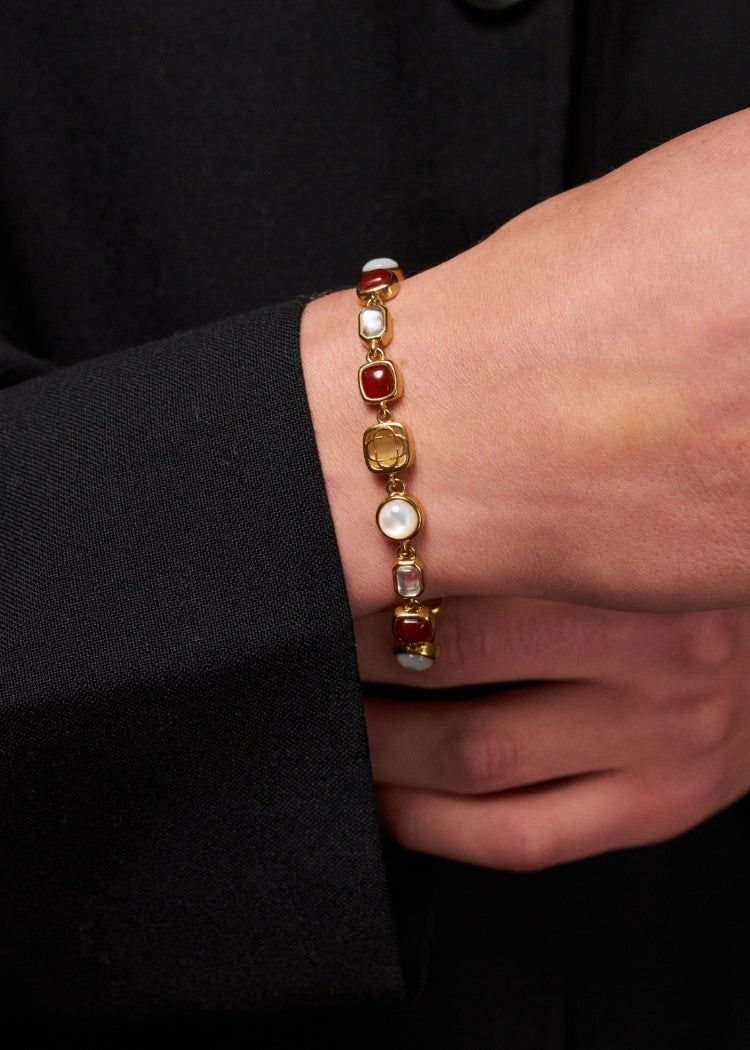
GEMSTONE BRACELETS
SHOP NOW



Cart
Your cart is empty
Your gifting options
Make your gift extra special with our luxury packaging options. Select a gift bag, gift box or a combination to create the perfect presentation.

Luxury Gift Box, Gift Bag & Wrapping Kit ($8.99)
Includes: CRAFTD Luxury Gift Box, Gift Bag, Tissue Wrapping Paper & Ribbon

Meaning Card ($2.99)
Add more meaning to your gift with a meaning card included with your order.
15 variations available

Luxury Gift Box ($5.99)
Choose your option
To My Boyfriend

To My Husband

To My Soulmate

To My Son

To My Grandson

To My Brother

To My True Friend

To My Dad

A Symbol Of Strength

A Symbol Of Faith

A Symbol Of Protection

A Symbol of Luck

A Symbol Of Safe Travel

A Symbol Of Self Belief

A Symbol Of Adventure
For most people, yes: genuine sterling silver is hypoallergenic. It's 92.5% silver, the rest is usually copper, and true silver allergies are rare.
So why do so many people say silver makes their skin itch? Because most of what gets called silver isn't the problem metal. The usual culprit is nickel, hiding in cheap silver-tone alloys and under thin plating. Here's what hypoallergenic actually means, what causes a reaction, how sterling compares with stainless steel and other metals, and how to choose jewelry if your skin is sensitive.

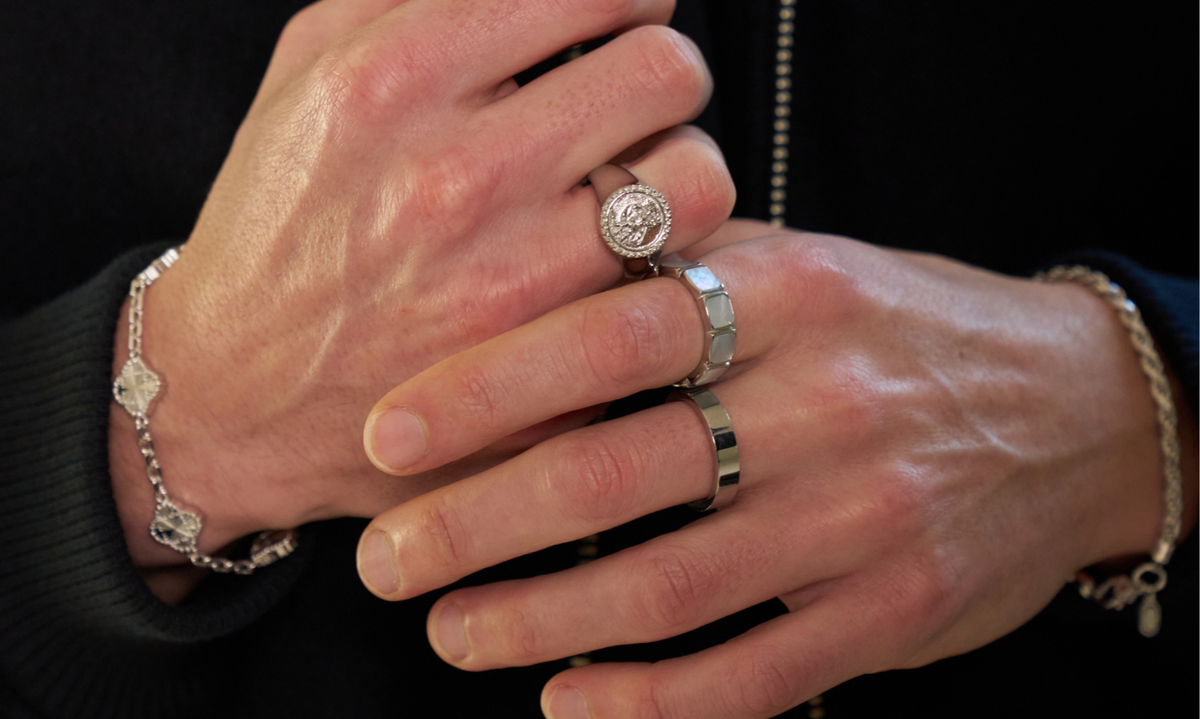
Solid sterling silver suits most skin. Featured: the Courage pendant in 925 sterling silver.
Jump to:
Hypoallergenic means less likely to cause an allergic reaction. It doesn't mean impossible. There's no single legal test a piece has to pass to use the word, so it describes a metal's track record rather than a guarantee.
That matters because the way to judge a piece is by what it's actually made of, and especially by what touches your skin, rather than by the label.
| Metal | Sensitive skin? | Why |
|---|---|---|
| Implant-grade titanium | Best | Used inside the body for exactly this reason |
| Fine silver (999) | Very good | Almost pure silver, but too soft for most jewelry |
| Sterling silver (925) | Good for most people | Usually alloyed with copper rather than nickel |
| Solid gold, 18K and up | Good for most people | Mostly gold; lower karats contain more alloy metal |
| 316L stainless steel | Good for most people | Contains nickel, but releases very little of it |
| Silver or gold plated | Depends on the base | Fine until the plating wears through to whatever is underneath |
| Nickel silver, alpaca, German silver | Avoid | Contains no silver at all, and plenty of nickel |
For the vast majority of people, yes. Pure silver is too soft to make jewelry from, so sterling is 92.5% silver mixed with 7.5% other metals for strength. In sterling, that's usually copper rather than nickel, and copper rarely causes a true allergic reaction.

Sterling is 92.5% silver, usually alloyed with copper rather than nickel. Featured: the 3mm Cuban chain in sterling silver.
Two things catch people out:
Sterling does tarnish, and that's a different thing from an allergy entirely. See does silver tarnish for what's happening there.

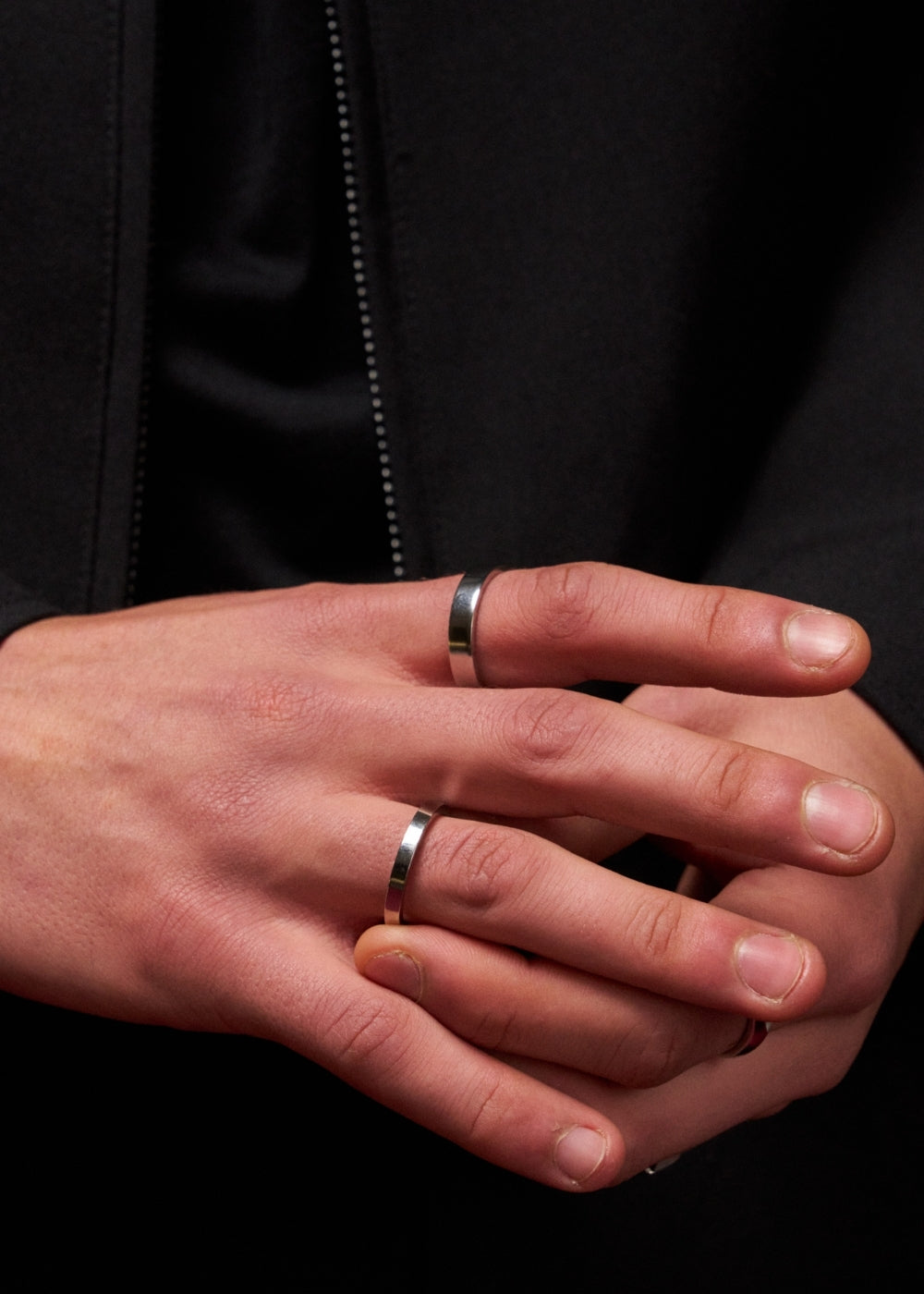
Rings sit against skin all day, so the metal matters most here. Featured: the 7mm Rounded Ring.
Nickel is one of the most common causes of contact allergy there is. It's why so many people believe they can't wear jewelry, when what they can't wear is cheap jewelry.
What matters is how much nickel a piece releases onto your skin, not just how much it contains. A well-made alloy can hold nickel and release almost none of it. A badly made one can release plenty, especially against warm, sweaty skin or through a piercing.
In the US, nobody is checking this for you. The EU and UK cap how much nickel a piece in prolonged skin contact is allowed to release. There's no federal equivalent here: manufacturers work to a voluntary industry standard, ASTM F2999 for adult jewelry, which reputable sellers follow and nothing legally requires. That makes what a piece is built from worth checking rather than assuming.
For most people, yes, and it's worth being straight about why. Stainless steel is an alloy of iron, chromium and nickel. 316L steel does contain nickel, but it's locked into the alloy, so very little is released against the skin. That's why it's used so widely for jewelry worn every day.

Rhodium-finished stainless steel: the silver look, and very little nickel released. Featured: the Compass pendant.
It isn't nickel-free, though, and no honest seller should say it is. If you've been diagnosed with a severe nickel allergy, implant-grade titanium is the material to ask a piercer about rather than any steel.
Rhodium, the bright, hard-wearing metal from the platinum family used to finish silver-tone steel, is itself well tolerated, and adds a further layer between the steel and your skin. Our comparison of sterling silver vs stainless steel goes further into choosing between the two.

Rhodium is the finish on our silver-tone steel. Featured: the 2mm Connell chain.
A lot of what people call a reaction isn't one. Here's how to tell:
If it's a rash, stop wearing the piece and let your skin settle. If it keeps happening, or it's severe, see a GP, pharmacist or dermatologist. A dermatologist can patch test to find out exactly which metal you react to, which is far more useful than guessing.
Earrings are where most reactions happen, because the post passes through skin rather than resting on it. On an earring, the part that matters is the post and the back, not the front.

With earrings, it's the post and back that touch your skin. Featured: the Round Stud.

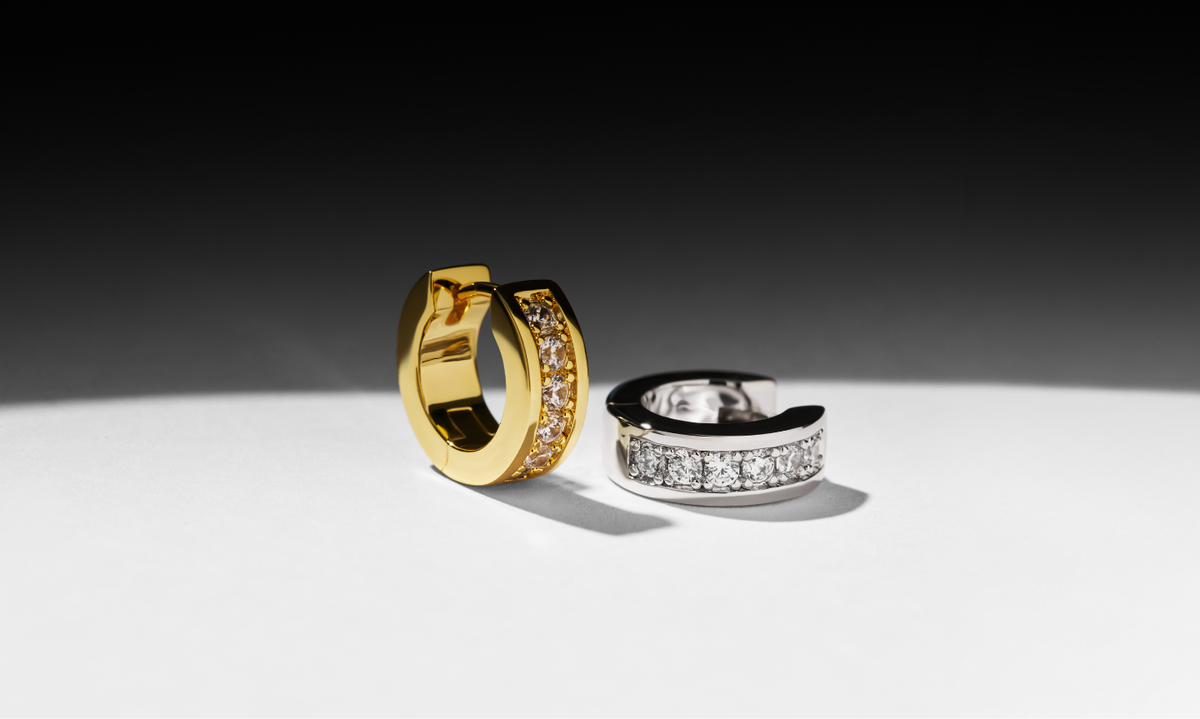
Our stone-set earrings have a solid stainless steel post and back. Featured: the Diamond Stud.
Our guide to the types of earrings for men covers which styles sit closest to the lobe and move the least, which also helps sensitive ears.
Here's exactly what touches your skin when you wear CRAFTD:
Every product page names the metal in its Our Materials section. If you have a diagnosed severe metal allergy, check with your GP, dermatologist or piercer before wearing any new jewelry, ours included.

A healed piercing and a well-made earring: the combination most ears are happy with. Featured: the Rounded Hoop.
For most people, yes. Sterling silver is 92.5% silver, and the rest is usually copper rather than nickel, so it rarely causes a reaction. Problems usually come from cheap silver-tone pieces with nickel in them, or from plating over a base metal, rather than from genuine sterling.
A true silver allergy is rare. Most reactions blamed on silver are actually to nickel, either in a low-quality alloy or in the base metal under silver plating. If genuine, hallmarked sterling still irritates your skin, speak to a GP or a dermatologist, who can arrange a patch test.
That's usually not an allergy. A gray or black mark is tarnish from the silver rubbing off onto your skin, and a green mark comes from copper in the alloy reacting with sweat. Both are harmless and wash off. A red, itchy or blistered rash is different, and that is a reaction.
For most people, yes. Stainless steel contains nickel, but it's locked into the alloy, so very little is released onto the skin. That's why it's widely used for jewelry worn every day. It isn't nickel-free, so anyone with a diagnosed severe nickel allergy should ask a piercer about implant-grade titanium.
Implant-grade titanium is the safest choice for very sensitive skin. After that, high-karat gold, platinum, genuine sterling silver and good-quality stainless steel suit most people. The metals to avoid are nickel silver, cheap plated pieces and anything unmarked from an unknown source.
Not reliably. The silver layer itself is fine, but plating is often laid over a base that contains nickel, and once it wears through, that base is in contact with your skin. If you have sensitive skin, choose solid sterling over plated.
Not for adult jewelry in the US. The EU and UK cap how much nickel a piece can release, but in the US manufacturers follow a voluntary standard, ASTM F2999, rather than a law.
Our 925 Collection is genuine sterling silver. Most of our silver-tone and gold pieces are a solid 316L stainless steel core finished in rhodium or 18K gold, which releases very little nickel. On our stone-set earrings, the post and back are solid stainless steel. If you have a diagnosed severe nickel allergy, check with a professional first.
Genuine sterling silver suits most skin. If you react to "silver", the culprit is almost always nickel in a cheap alloy or under plating, so choose hallmarked sterling or good-quality stainless steel, and keep fashion earrings for healed piercings.
Browse our 925 sterling silver collection, or our men's earrings.
How to Clean Earrings: A Step-by-Step Guide
Earrings sit against skin all day, which is why they build up faster than anything else you wear, and why the post and the back are always dirtier than the part you can see. Here's the ten-minute m...
Read more
Does Gold Tarnish? Solid, Plated and Vermeil Gold Explained
Pure gold doesn't tarnish, so why does so much gold jewelry fade? Here's what's really happening with solid, plated and vermeil gold, how to tell which you own, and how to keep it bright.
Read more


Leave a comment
This site is protected by hCaptcha and the hCaptcha Privacy Policy and Terms of Service apply.