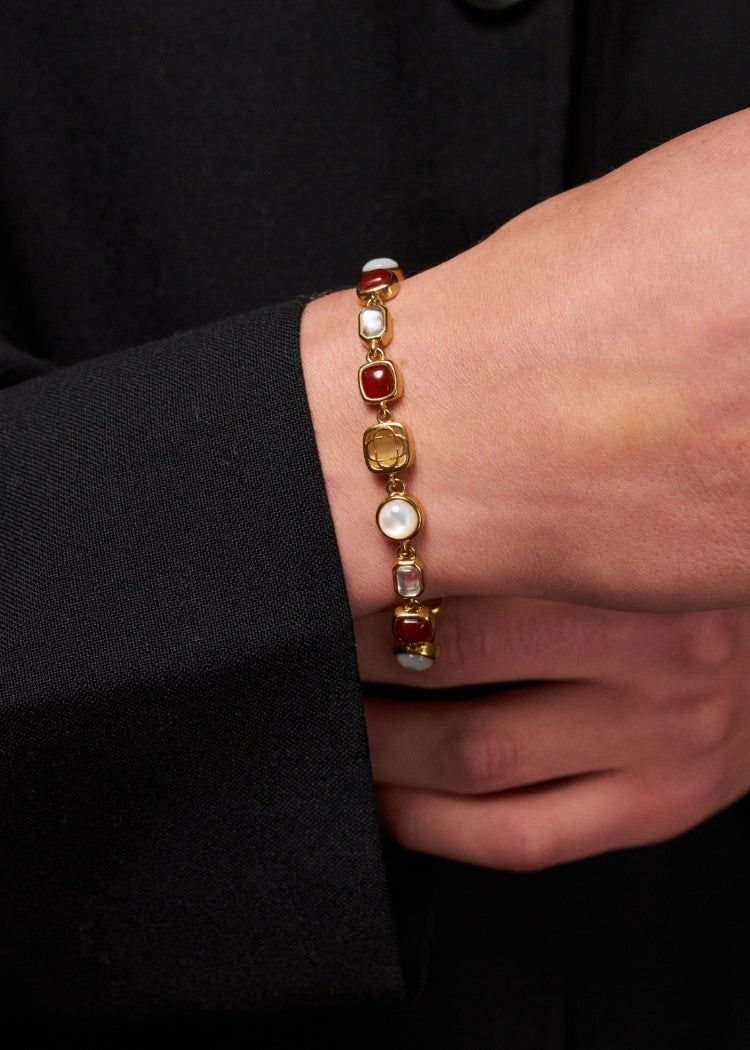
GEMSTONE BRACELETS
SHOP NOW



Cart
Your cart is empty
Your gifting options
Make your gift extra special with our luxury packaging options. Select a gift bag, gift box or a combination to create the perfect presentation.

Luxury Gift Box, Gift Bag & Wrapping Kit ($8.99)
Includes: CRAFTD Luxury Gift Box, Gift Bag, Tissue Wrapping Paper & Ribbon

Meaning Card ($2.99)
Add more meaning to your gift with a meaning card included with your order.
15 variations available

Luxury Gift Box ($5.99)
Choose your option
To My Boyfriend

To My Son

To My Grandson

To My Brother

To My True Friend

To My Dad

A Symbol Of Strength

A Symbol Of Faith

A Symbol Of Protection

A Symbol of Luck

A Symbol Of Safe Travel

A Symbol Of Self Belief

A Symbol Of Adventure
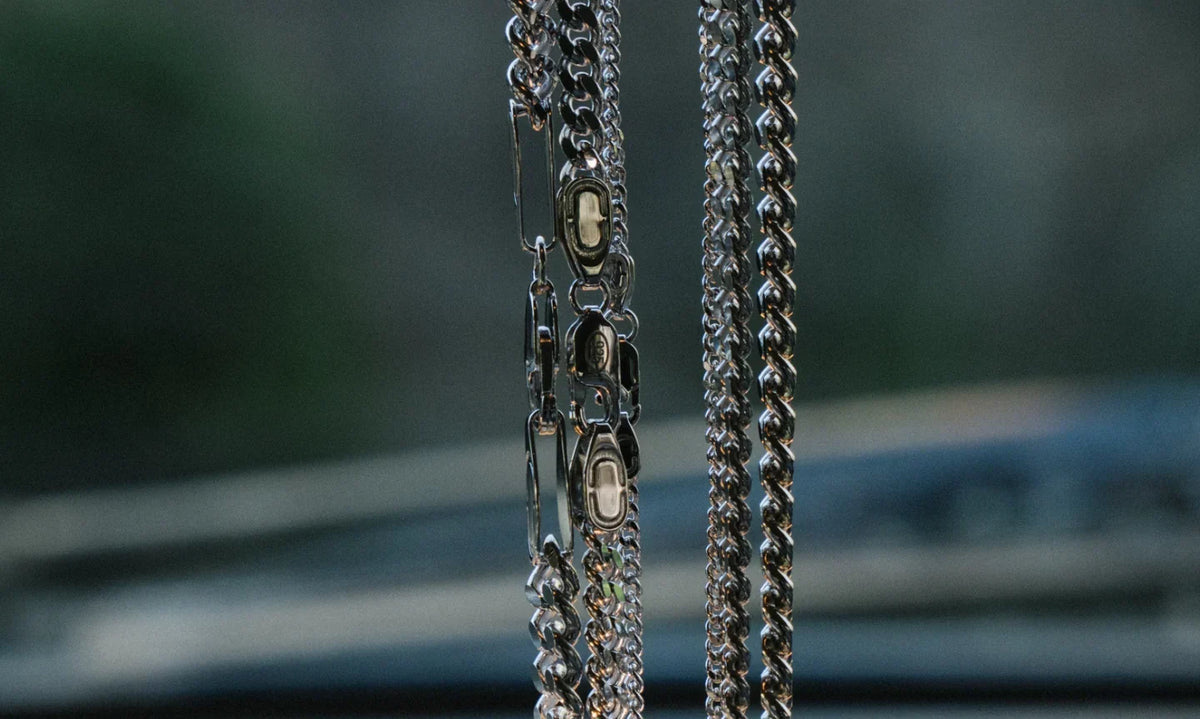
Turn a ring over and there's usually something stamped inside the band. Three numbers, a couple of letters, sometimes a tiny animal.
Most people never look. The ones who do usually can't read it.
Those marks are the only part of a piece of jewelry that has to tell the truth. Everything else, from the description to the photograph to the price, is written by whoever is selling it. The stamp is the metal declaring what it actually is.
Below is what every mark means, what a US stamp legally has to do, and what to do when there's no stamp at all.
Jump to:
A mark on jewelry does one of four jobs. Once you know which is which, most of the confusion goes.
It tells you the metal and its purity. This is the number: 925, 750, 585. It's a fineness mark, and it says how many parts per thousand of the piece are the precious metal.
It tells you who made it. A maker's mark: a registered trademark, initials or a small symbol identifying the manufacturer.
It tells you it's a coating, not solid metal. Letters like GP, GEP or GF describe a layer over a base metal.
And on British and European pieces, it tells you who tested it. An assay office mark, which is a small symbol showing that an independent body verified the metal. There is no American equivalent, and that turns out to matter more than anything else on this page.
Anything else (a serial number, an engraving, a design registration) is extra, and usually specific to one maker.
One thing worth being clear about up front: a fineness number describes solid metal, not a coating. A piece stamped 750 is 18 karat gold all the way through. Plated pieces are marked differently, and we'll come to those.
The full list, grouped by what you're likely holding.
| Mark | What it means |
|---|---|
| 417 | 10 karat gold (41.7%). The usual entry standard in the US. |
| 585 | 14 karat gold (58.5%). The most common gold standard in America. |
| 750 | 18 karat gold (75%). The usual choice for fine jewelry. |
| 375 | 9 carat gold (37.5%). British; you'll meet it on imported and antique pieces. |
| 916 or 917 | 22 karat gold (91.6%). Common in South Asian jewelry. |
| 990 or 999 | 24 karat gold, effectively pure. |
| 10K, 14K, 18K, 24K | American karat marks, used alongside or instead of the numbers. |
| 9ct, 14ct, 18ct, 22ct | British carat marks. Same meaning, different spelling. |
| Mark | What it means |
|---|---|
| 925 | Sterling silver (92.5%). The standard worldwide. |
| 958 | Britannia silver (95.8%). A higher British standard. |
| 800, 830, 835 | Continental European silver, below sterling. |
| 999 | Fine silver, effectively pure. Too soft for most jewelry. |
| STER, STG, SS | Sterling, but see the warning below about SS. |
| COIN | An older American mark, 90% silver. Rare on modern pieces. |
| Mark | What it means |
|---|---|
| PT, PLAT, 950, 900 | Platinum. 950 is the usual jewelry standard. |
| PD, PALL, PD950 | Palladium. |
| TI | Titanium. Not a precious metal, so no fineness mark. |
| TUNG, WC | Tungsten or tungsten carbide. |
| 316L, 304, SS | Stainless steel. |
| Mark | What it means |
|---|---|
| GP | Gold plated. A gold layer over a base metal. |
| GEP | Gold electroplate. The same thing, named after the process. |
| HGE, HGP | Heavy gold electroplate. Thicker than standard, no fixed minimum. |
| RGP | Rolled gold plate. An older mechanical process. |
| GF, or 1/20 12K GF | Gold filled. A thick bonded layer, the fraction being the gold's share of total weight. |
| SP, EP, EPNS | Silver plated, electroplated, or electroplated nickel silver. No silver content worth counting. |
| CZ | Cubic zirconia. |
| DIA | Diamond. |
The one that catches people out: SS. It can mean sterling silver, and it can mean stainless steel, and those are wildly different things. Context decides it: a delicate ring is probably sterling, a heavy watch bracelet is probably steel. If it matters, look for a 925 alongside it. Sterling almost always carries the number too.
And the second one: 925 on a gold-colored piece. That doesn't mean it's silver pretending to be gold. It means gold vermeil, real gold over a solid sterling silver base, so it carries the mark of the metal underneath rather than the gold on the surface. Our guide to 18K gold vs gold vermeil explains how that's built.
This is the part that changes how you should read every mark above, and almost nobody explains it.
There is no hallmarking in the United States. No assay offices, no independent testing, no date letters. Nothing requires a maker to stamp a piece at all. A completely unmarked gold ring can be sold here perfectly legally.
What the law does is narrower, and it's worth knowing exactly where it bites.
If a quality mark is applied, it has to be true. The National Gold and Silver Marking Act, in force since 1906, makes it an offense to stamp a fineness that the metal doesn't meet. Since 1 October 1981 the tolerance has been tight: the actual fineness can't fall short of the marked fineness by more than 3 parts per thousand, or 7 parts per thousand where solder is included.
And a quality mark has to be signed. This is the useful one. Since the 1961 amendment, any maker applying a quality mark must also apply their own registered trademark, struck by the same method and placed as close to it as possible.
So here is a test you can actually use. On a piece made for the US market, a fineness number standing alone, with no maker's mark anywhere near it, is a combination that shouldn't legally exist. That doesn't make it fake. It does make it a fair question.
Plated pieces have their own rules, and they're stricter than most people assume. A plated article can't carry a bare fineness word: it has to say plainly that it's rolled gold plate, gold plate, gold electroplate or gold filled. And a plated article may not be stamped "sterling" at all, in any combination, which makes that particular mark a useful one to trust.
What this adds up to. An American stamp is the maker's own claim, backed by law but never checked by anyone before it reaches you. A British hallmark is somebody independent having already looked. Both are worth reading. Only one of them is evidence.
Gold is measured in karats, and a karat is one twenty-fourth. So 18 karat gold is eighteen parts gold in twenty-four, which is 75%, which is why it's stamped 750. Every gold number works the same way.
The American and British difference is worth knowing, because it causes real confusion on imported and antique pieces:
So the two words in "a 0.5 carat diamond in an 18 karat gold ring" are doing genuinely different jobs, and both spellings are correct.
Watch for 375 and 417. British 9 carat is stamped 375 and American 10 karat is stamped 417, and they are not the same thing. 375 is sometimes wrongly described as 10 karat by sellers who assume the numbers are interchangeable. They aren't, and the difference is real gold content.
Higher isn't automatically better. Pure gold is very soft, which is why 24 karat is rarely used for anything worn daily. 10 karat is harder and far more scratch-resistant; 14 and 18 karat are the usual compromises between richness of color and durability. What the number really tells you is value and softness, not quality.
On white gold specifically, the mark tells you the gold content and nothing about the color. There's no separate white gold mark, which trips people up constantly. Rose gold vs white gold covers what the difference actually is and what the rhodium on top is doing.
925 is the one you'll see almost every time. Sterling silver: 92.5% silver, 7.5% other metals, usually copper. Pure silver is too soft to hold a shape, so the alloy is what makes it wearable.
958 is Britannia silver, a higher British standard introduced in 1697 and still used. 800 to 835 turns up on continental European pieces and is below sterling, perfectly legitimate but simply less silver. COIN is an older American mark meaning 90% silver, and you'll mostly meet it on antiques.
A 925 stamp is not proof on its own. It's applied by the maker, and in a country with no independent assay that's all it is: a claim with a law behind it. The strongest signals you have are the maker's trademark sitting beside it, as the law requires, and the metal's own behaviour. The difference between sterling silver and silver goes through how to check a piece properly.
These are the marks that describe a coating rather than the metal itself, and they're the ones most likely to be misread as a purity mark.
None of these describes the base metal underneath, which is the part that decides how a plated piece ages. That's the question to ask, and what gold plated means goes through the two numbers that actually matter.
You'll meet these on antique and imported pieces, and they're worth being able to read, because they carry information no American mark does.
British hallmarking is compulsory and independent. A precious metal item sold in the UK above a certain weight must be tested by an assay office before it can legally be called gold, silver, platinum or palladium. The maker doesn't get to self-declare. It's been running in some form since 1300, which makes it one of the oldest consumer protection systems anywhere.
A full hallmark has three compulsory parts, usually struck in a row:
1. The sponsor's mark. Two or more letters in a shaped surround, identifying who submitted the piece. Every sponsor's mark is registered and unique, so unfamiliar initials can usually be traced.
2. The fineness mark. The number (375, 925, 950) inside a shape that indicates the metal. Gold, silver, platinum and palladium each get a different outline.
3. The assay office mark. A small symbol showing where it was tested:
And the part with no American equivalent: the date letter. An optional but very common fourth mark, which changes every year. It means a British piece can usually be dated to a single year, decades or centuries after it was made. Nothing in the US marking system does that, which is why British hallmarks are so useful to collectors and appraisers.
How to use this practically. If you're buying something second-hand that's described as British, solid gold or sterling, look for the assay office symbol, not just the number. A lone 925 is a maker's claim. A 925 next to a leopard's head has been independently tested.
A question that comes up far more than you'd think, and the honest answer is mostly no, though there are some things you can do about it.
Quality marks don't identify individual pieces. This is the part people get wrong. A mark says what the metal is and who made it. It doesn't carry a unique number for your particular ring. Ten thousand identical pieces from the same maker carry identical marks.
Most jewelry has no serial number at all. Watches usually do, often on the case back or between the lugs, and that genuinely helps. Fine jewelry over a certain value sometimes carries one, and diamonds above roughly a carat are often laser-inscribed on the girdle with a certificate number, readable under magnification. Everyday jewelry generally has nothing.
And the harder truth: precious metal gets melted. A stolen chain often stops existing as a chain within days, which is why recovery rates are low and why identification usually matters more for insurance than for getting the piece back.
What actually helps, and it's worth ten minutes:
If you've been burglarized, report it to the police and to your insurer, and give them the photographs and any inscription wording. That combination does more than a quality mark ever will.
An unmarked piece isn't necessarily fake, and in the US it's less suspicious than people assume, because marking was never required in the first place.
The mark may have worn away. Stamps are shallow, and decades of wear can rub one almost flat, especially on a ring band, which takes constant abrasion. A jeweler's loupe often finds what the naked eye can't.
It might be older, or handmade. Plenty of legitimate antique and small-workshop jewelry carries no mark.
It might be resized. Ring sizing sometimes removes the section of band carrying the stamp, and a good jeweler will note this.
The combination that is worth questioning isn't an absent mark. It's a fineness number with no maker's trademark beside it, because on a US piece those two are legally required to travel together.
Two things you can do yourself. A magnet is a quick negative test: gold, silver, platinum and palladium aren't magnetic, so a piece that jumps to a magnet isn't solid precious metal (though non-magnetic doesn't prove it is). And for silver specifically, tarnish is a good sign: genuine sterling tarnishes, and something sold as silver that never does is usually plated. How long sterling silver lasts covers that in more detail.
Worth saying plainly where we sit, since this page is about reading what a piece declares about itself.
Our sterling silver range is genuine 925, and carries a 925 stamp. It behaves like sterling too: it will tarnish eventually and polish straight back, because the silver goes all the way through.
Most of our range is built on a solid 316L stainless steel core, finished in rhodium for silver-tone pieces or real 18 karat gold for gold-tone. Steel isn't a precious metal, so it carries no fineness mark, and that's the category rather than a shortcut. What you get instead is a finish that's waterproof, sweatproof and heatproof, on a core that can't rust, tarnish or corrode underneath it. The one exception worth knowing is chlorine and salt water, which are aggressive on any gold surface, so pools and the ocean are the two places worth taking a gold-finished piece off. How to clean a gold chain covers the rest.
We also make gold vermeil, real 18 karat gold over solid sterling silver, which is why those pieces carry a 925 mark despite being gold-colored.
Three constructions, three different things a mark can tell you, and every product page says which is which.
Most marks do one of four jobs: state the metal's purity as a number like 925 or 585, identify the maker, describe a coating, or (on British and European pieces) show which assay office tested it. A fineness number describes solid metal all the way through, while letters like GP or GEP describe a coating over a base metal.
No. The US has no assay offices and no compulsory hallmarking, so nothing requires a maker to mark a piece at all. What the law does require is that any quality mark applied is accurate, and that it is accompanied by the maker's registered trademark. So a US stamp is the maker's own claim rather than an independent verdict.
Sterling silver: 92.5% pure silver with 7.5% other metals, usually copper. On a gold-colored piece, 925 means gold vermeil, because the mark refers to the sterling silver base underneath the gold.
14 karat gold, meaning 58.5% pure gold alloyed with other metals. It's the most common gold standard in the US. The equivalent marks are 417 for 10 karat, 750 for 18 karat and 916 for 22 karat.
In America, karat with a K means gold purity and carat with a C means gemstone weight. In Britain, carat with a C means both, and you tell them apart by context. So a 0.5 carat diamond in an 18 karat gold ring is correct American usage, and both spellings appear in the same sentence for a reason.
Gold plated, gold electroplate and heavy gold electroplate. All three describe a gold coating over a base metal rather than solid gold, and none has a guaranteed minimum thickness. US law requires that a plated piece carrying a fineness word says plainly that it is plated, and a plated piece may not be stamped sterling at all.
It can be either, which is exactly the problem. Sterling silver almost always carries 925 as well, so if you only see SS with no number, it's more likely stainless steel. Weight and context help, since steel is used for heavier, more industrial pieces.
Usually not. A quality mark identifies the metal and the maker, but not your individual piece, so identical items carry identical marks. Watches often have serial numbers, and diamonds above about a carat are frequently laser-inscribed, but most everyday jewelry has nothing unique on it. Photographs, appraisals and any personal engraving are far more useful for identification.
A stamp identifying who made a piece. On US jewelry it is a registered trademark, and the law requires it to appear alongside any quality mark. On British pieces it's a registered sponsor's mark that can be traced through the assay offices. On modern jewelry generally it's often a brand logo, which identifies the maker but says nothing about metal content.
Not necessarily anything bad, especially in the US, where marking was never compulsory. The mark may have worn away, the piece may be antique, or it may have been lost during resizing. But a fineness number appearing with no maker's mark beside it is the combination worth questioning, because on a US piece that pairing is a legal requirement.
The marks on a piece of jewelry are the one part of it that has to be honest. Learn six or seven of them and you can walk into any estate sale and know what you're looking at.
The short version, and it's the thing most guides leave out: numbers mean solid metal, letters usually mean a coating, and in America the stamp is the maker's word rather than an inspector's. Look for the trademark beside the number.
If you want to go deeper on a particular metal, the difference between sterling silver and silver covers the 925 mark, rose gold vs white gold covers the gold colors, and what gold plated means covers everything with a coating on it.

Minimalist Jewelry for Men: Every Style, and Who It's For
Minimalist jewelry is the one category you can't really get wrong. No outfit it clashes with, no trend it falls out of, no room it's wrong for. Here's every style, and who each one suits.
Read more
How Much Is a Gold Bar Worth? How to Work It Out
Weight in troy ounces, times the gold price, times the purity. That's the whole calculation. Here's how to do it properly, and why the number you work out is never the number you'll be paid.
Read more


Leave a comment
This site is protected by hCaptcha and the hCaptcha Privacy Policy and Terms of Service apply.