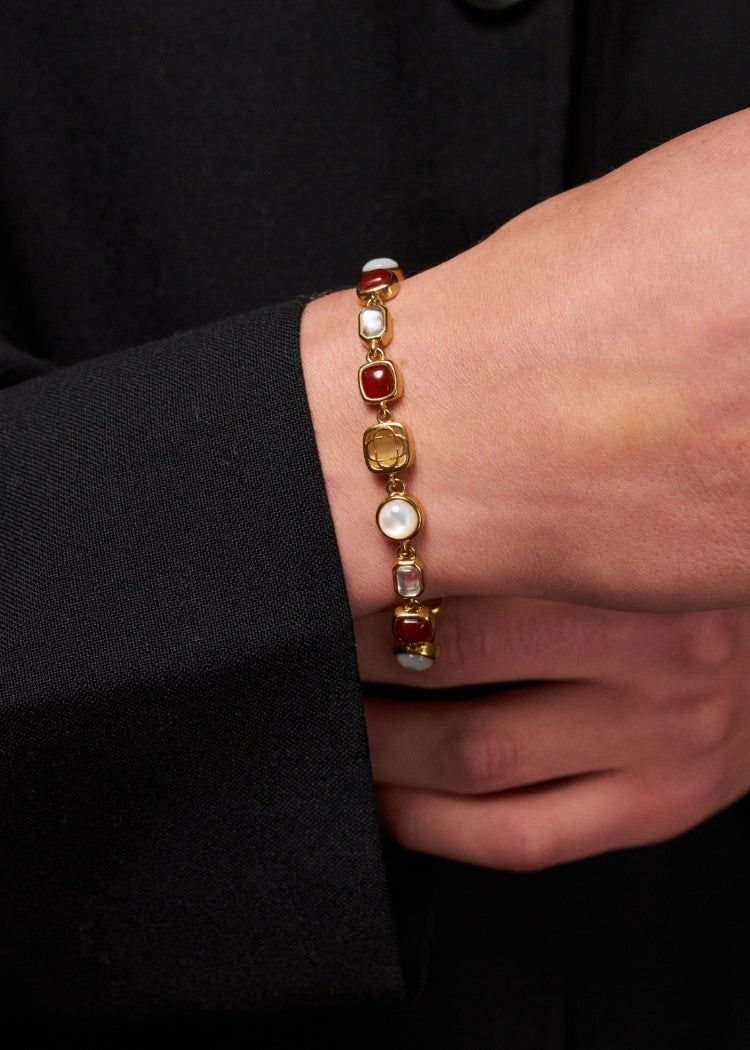
GEMSTONE BRACELETS
SHOP NOW



Cart
Your cart is empty
Your gifting options
Make your gift extra special with our luxury packaging options. Select a gift bag, gift box or a combination to create the perfect presentation.

Luxury Gift Box, Gift Bag & Wrapping Kit ($8.99)
Includes: CRAFTD Luxury Gift Box, Gift Bag, Tissue Wrapping Paper & Ribbon

Meaning Card ($2.99)
Add more meaning to your gift with a meaning card included with your order.
15 variations available

Luxury Gift Box ($5.99)
Choose your option
To My Boyfriend

To My Husband

To My Soulmate

To My Son

To My Grandson

To My Brother

To My True Friend

To My Dad

A Symbol Of Strength

A Symbol Of Faith

A Symbol Of Protection

A Symbol of Luck

A Symbol Of Safe Travel

A Symbol Of Self Belief

A Symbol Of Adventure
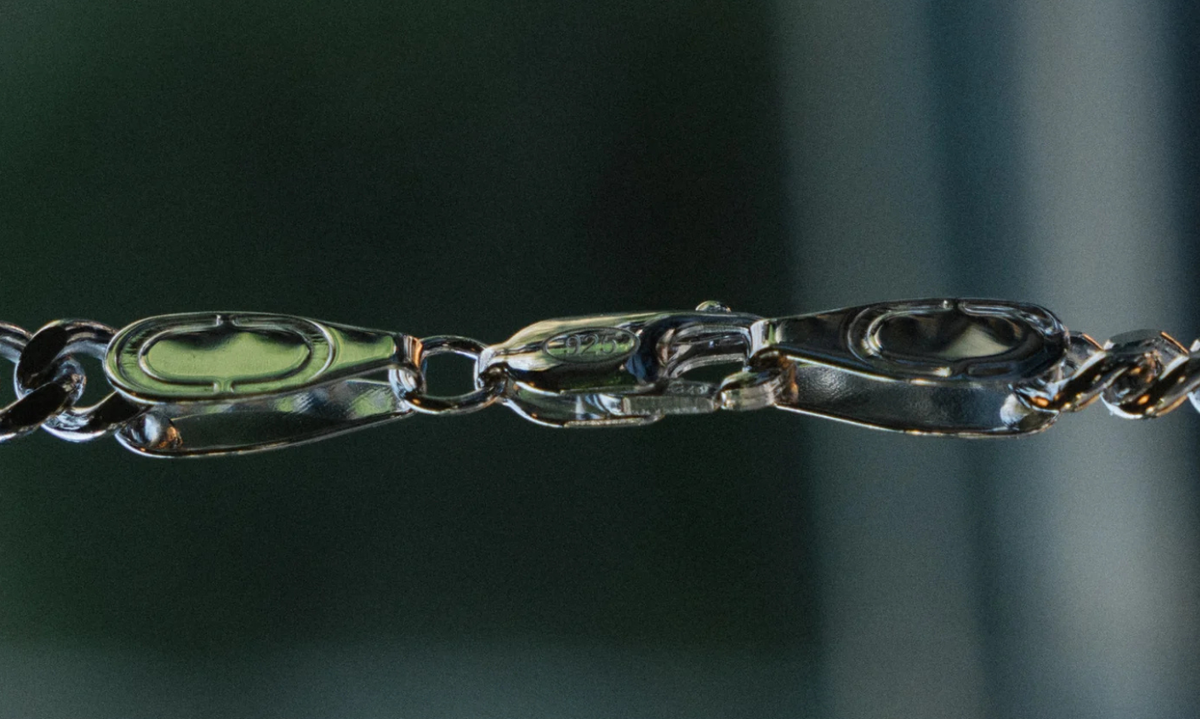
925 means the metal is 92.5% pure silver. The remaining 7.5% is another metal, almost always copper. That's the whole answer, and it's the same thing as sterling silver.
What's more useful is everything around it: the marks that contain 925 without meaning what you'd think, what a stamp is actually worth in the United States, and why a number on a clasp should raise your confidence rather than settle the question.
Jump to:
925 is a purity figure, written as parts per thousand: 925 parts silver in every 1,000 parts of metal. So 92.5% silver, 7.5% something else, and that something else is almost always copper.
The obvious question is why anyone would water silver down at all. The answer is that pure silver is too soft to be much use. It bends, it scratches, and it won't hold a clasp or a setting under daily wear. Adding a small amount of copper makes it hard enough to actually wear, without changing the color or the feel in any way you'd notice.
So 925 isn't a compromise. It's the ratio the trade settled on centuries ago because it works, and it's exactly what "sterling silver" means. The two terms are interchangeable, and if you want the full picture of how the grades fit together, the difference between silver and sterling silver lays them all out.
This is the part that changes depending on where you're standing, and most guides written for an American audience borrow the British answer without noticing.
Britain runs a hallmarking system. Silver above a threshold weight has to go to an independent assay office, be tested, and be struck with that office's own mark alongside the fineness. It has been running since the 1300s and it makes a British hallmark a third party's verdict rather than the seller's word.
The United States has nothing equivalent. There are no assay offices, no compulsory testing, and no legal requirement to mark a piece at all. A 925 stamp here is applied by the maker or importer, and it is their claim about their own product.
What American law does instead is make that claim accountable. Under the National Stamping Act, anyone applying a quality mark to a silver or gold article must also apply their registered trademark, or their name, to the same piece. The FTC sets what the words have to mean: "sterling" requires at least 925 parts per thousand, "coin silver" at least 900, and the marked fineness can only be off by four parts per thousand, or ten where there's solder.
So the practical reading: the name beside the number is the part that makes the number mean something. A 925 with a maker's mark next to it is a claim somebody can be held to. A 925 sitting alone on an unidentified import is a stamp struck into metal, and nothing physically stops anyone striking it into metal containing no silver at all.
That's why a stamp should raise your confidence rather than end the conversation, and why the tests in how to tell if silver is real still matter. The symbols stamped on jewelry covers every other mark you'll meet.
This is where most of the confusion lives, because several marks contain 925 while meaning different things.
The most misread mark there is. The S simply stands for silver, and S925 means sterling, same as 925 on its own. It's extremely common on jewelry manufactured in China, which is why it has picked up a reputation it doesn't deserve. It is not a warning sign.
Sterling made in Italy. Italy is one of the biggest chain producers in the world, so this turns up constantly and is a good sign rather than a bad one. A great deal of the world's best chain comes out of Vicenza and Arezzo.
Country of manufacture again, nothing more. Thailand and China both produce enormous quantities of genuine sterling, a lot of it excellent.
These are the ones to actually watch. Gold filled and silver filled. A layer of precious metal bonded to a base, not solid through. The 925 describes the layer rather than the piece, which is a meaningfully different claim even though it uses the same number.
Older abbreviations for sterling. Genuine, same 92.5%.
Not a purity guarantee. Under FTC rules an unqualified "silver" is supposed to carry a fineness figure immediately before it, so a bare SILVER with no number is telling you less than it appears to. Treat it as unverified.
Electroplated nickel silver, and there's no sterling anywhere in it. The base is a copper-nickel alloy containing no silver at all, with a silver coating on top. Silver plated vs sterling silver goes through the full set of plating marks.
If you've ever wondered why gold jewelry carries three-digit numbers too, this is why. It's the same parts-per-thousand scale.
| Number | Karat | Gold content |
|---|---|---|
| 417 | 10K | 41.7% |
| 585 | 14K | 58.3% |
| 750 | 18K | 75% |
| 916 | 22K | 91.6% |
| 999 | 24K | Effectively pure |
American pieces more often carry the karat directly, 14K or 18K, while imported ones tend to carry the number. Both say the same thing, and note that 585 is the mark for 14K even though the exact figure is 58.3%. The stamp rounds up.
Worth clearing up a common mix-up: all of those are solid gold. A 750 piece is 18 karat solid gold that happens to be alloyed for strength, exactly as sterling silver is. Alloying isn't plating and it doesn't make a piece less genuine.
Plated and vermeil pieces are a different thing again, and they don't carry a gold purity stamp for the piece as a whole, because the gold is only on the surface. A vermeil piece will often carry a 925 stamp instead, since the metal underneath the gold is sterling silver. That surprises people. Our guide to 18k gold vs gold vermeil covers how those are built, and the different types of gold covers the wider picture.
In the United States, far less than you'd think. There's no law requiring anything to be marked, so an unmarked piece is entirely normal and entirely legal.
That's a genuine difference from Britain, where hallmarking is compulsory above a threshold weight and a missing mark on a heavy piece is a real red flag. Here it isn't evidence of anything by itself.
Four reasonable explanations, and only one of them is bad news:
So a missing stamp doesn't answer the question either way. It just means you have to test rather than read.
Less than most people assume, and understanding that changes how you shop.
Silver is inexpensive by weight. A sterling chain contains a real quantity of a real precious metal, and the raw metal value of it is usually a small fraction of what you paid. That isn't a markup scandal; it's the nature of the material.
What you're actually paying for in a good sterling piece is everything except the silver: the design, the construction, how well the links articulate, whether the clasp is any good, the quality of the finish, and whether the thing survives being worn. Two sterling chains of identical weight can differ enormously in price and both be fairly priced, because the metal was never the expensive part.
The practical consequence: 925 is a floor, not a ranking. It tells you the metal is genuine. It tells you nothing about whether the piece is well made, and a stamp is a poor substitute for picking something up.
Four things, none of which is stamped anywhere.
The clasp. The single most reliable indicator on a chain. It's the part that fails, the part that gets used most, and the part cheap manufacturing skimps on first. A clasp that operates crisply and sits flush is a sign somebody cared.
How the links move. Pick a chain up and let it fall. Good construction drapes and follows the neck. Poor construction kinks, holds a shape it shouldn't, or feels stiff in one direction.
Weight for size. Hollow links are not a scandal, and they're how some designs are possible at all, but a chain that looks substantial and weighs almost nothing is telling you where the money went.
The finish, at the joins. Look where two pieces of metal meet. Clean, even, properly polished joins are slow work. Rough or pitted ones are the first place a rushed piece gives itself away.
Straightforward, since this whole page is about marks meaning what they say.
Our 925 Collection is stamped 925, because those pieces are genuine sterling silver, 92.5% throughout. They'll tarnish over time and polish straight back, exactly as sterling does.
We don't stamp 925 on anything that isn't. Most of our silver-tone range is solid 316L stainless steel finished in rhodium, which is not silver and carries no silver mark, because marking it as such would be false. Our product pages name the metal outright on every piece.
That's not a virtue worth boasting about, it's the baseline. But given how much of this page is about marks that mislead, it's worth saying which category ours fall into. If you want the full answer on that, we've written it up in how to tell if silver is real.
That the metal is 92.5% pure silver, with the remaining 7.5% usually copper. It's a purity figure written as parts per thousand, and it's the same thing as sterling silver. The two terms are interchangeable.
Yes. 925 is the standard for silver jewelry worldwide, and the 7.5% that isn't silver is there to make the metal hard enough to wear. Pure silver bends and scratches too easily to make a chain from.
The same as 925. The S just stands for silver. It's extremely common on jewelry manufactured in China, which has given it an undeserved reputation. S925 is sterling, and the letter tells you nothing bad.
Yes, and it's a good sign rather than a bad one. Italy is one of the largest chain manufacturers in the world, so 925 Italy simply means sterling silver made there. The same goes for 925 China or 925 THA, which are country marks and nothing more.
Gold filled or silver filled. The number describes a bonded layer rather than the whole piece, so these are not solid sterling. A plain 925 with no letters after it is the solid one.
No, and this is the part most guides skip. In the US a stamp is applied by the maker rather than an independent assay office, so it's a claim rather than proof. What the law adds is accountability: anyone applying a quality mark must also apply their registered trademark or name.
In the United States that's completely normal, because there's no law requiring anything to be marked. A missing stamp isn't evidence of anything on its own. It just means you'll need to test the piece rather than read it.
Far less than the price of most sterling jewelry, which is the point worth understanding. Silver is inexpensive by weight, so what you're paying for in a good piece is the design, the construction and the finish rather than the metal.
Yes, exactly the same. 925 is the fineness and sterling is the name that fineness has carried for centuries. A piece marked 925, STERLING or STER. is all describing the same alloy.
On our 925 Collection, yes, because those pieces are genuine sterling silver. We don't stamp 925 on anything that isn't, which includes our rhodium-finished steel, because that's not silver and marking it as such would be false.
925 means 92.5% silver, it means sterling, and in America it means the maker says so rather than an assay office. Read the name beside the number, then judge the piece by its clasp rather than its stamp.
Have a look through the 925 Collection if you're after genuine sterling, or the silver chains if you'd rather have the look with no upkeep.
White Gold vs Silver: What's the Real Difference?
They look the same in the case and age completely differently. Sterling silver's colour is the metal, so it tarnishes and polishes back. White gold's colour is a rhodium coating, so it wears and ne...
Read more
How to Clean Gold-Plated Jewelry Without Damaging It
Most gold-plated jewelry doesn't wear out, it gets cleaned out. Nearly every cleaning tip online was written for solid gold, and on a plated piece toothpaste, baking soda and ultrasonic cleaners al...
Read more


Leave a comment
This site is protected by hCaptcha and the hCaptcha Privacy Policy and Terms of Service apply.