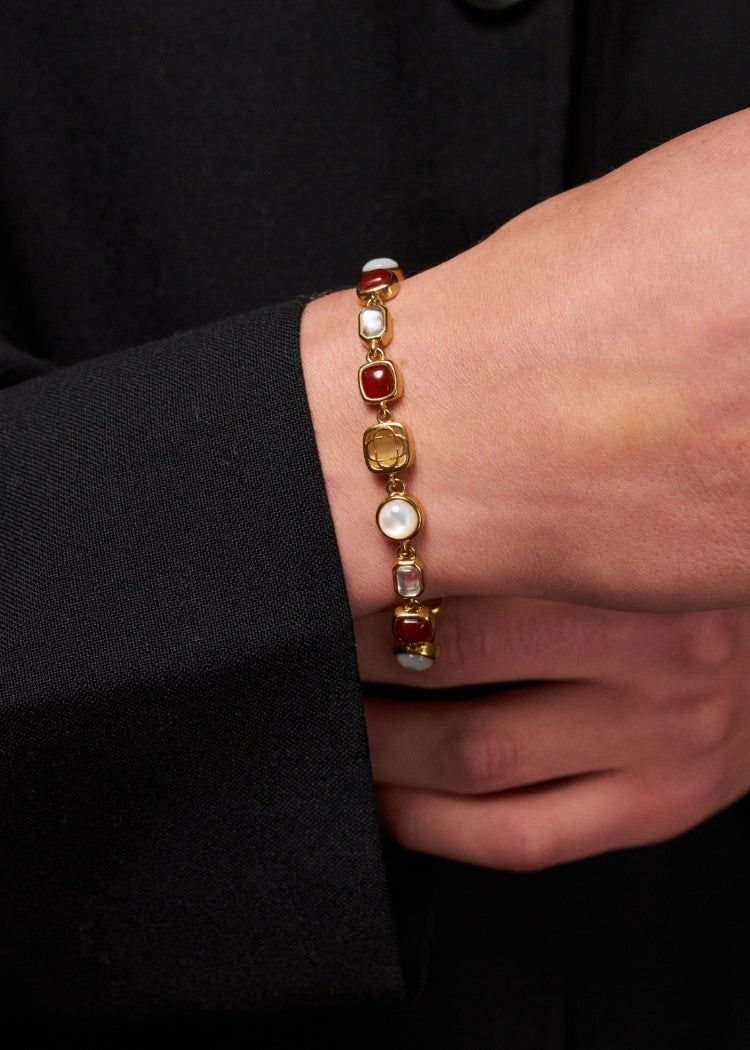
GEMSTONE BRACELETS
SHOP NOW



Cart
Your cart is empty
Your gifting options
Make your gift extra special with our luxury packaging options. Select a gift bag, gift box or a combination to create the perfect presentation.

Luxury Gift Box, Gift Bag & Wrapping Kit ($8.99)
Includes: CRAFTD Luxury Gift Box, Gift Bag, Tissue Wrapping Paper & Ribbon

Meaning Card ($2.99)
Add more meaning to your gift with a meaning card included with your order.
15 variations available

Luxury Gift Box ($5.99)
Choose your option
To My Boyfriend

To My Husband

To My Soulmate

To My Son

To My Grandson

To My Brother

To My True Friend

To My Dad

A Symbol Of Strength

A Symbol Of Faith

A Symbol Of Protection

A Symbol of Luck

A Symbol Of Safe Travel

A Symbol Of Self Belief

A Symbol Of Adventure

Men's jewelry is one of the easiest ways to look more put together, and one of the easiest things to overthink. Scroll a collection page for ten minutes and you will have a wishlist as long as your arm and no idea which piece to actually buy first.
Here is the part nobody tells you: there is no right way to wear it. There is only an order that makes it easier. Start simple, add meaning, then go bold. That is the whole guide, and the rest of this page is just the detail.

Take what works and skip what does not. There are no rules here, so jump a step if that is what feels right. Your collection is going to change over the next few years anyway, and the pieces you end up wearing most are rarely the ones you expected.
Worth saying up front: there is no such thing as a finished collection, and nobody builds one in a single order. Pieces get added a couple a year, usually around something that happened, and five years in you end up with a set that means something rather than a set that matches. So there is no rush on any of this. The only mistake you can really make is buying six things at once and wearing none of them.
Jump to:
Step one: start simple
Step two: add meaning
Step three: go bold
Gold or silver, and why you should own both
Layering without overdoing it
Timeless beats trend-led, almost always
Looking after it
FAQs
If you are new to jewelry, or you just want a look that goes with everything you own, start here. Clean, minimal pieces that quietly lift a fit rather than announce themselves. Thin box chains, plain band rings, simple cuffs.
These are the foundations. Low effort, high reward, designed to work with whatever you are wearing. Think of them the way you think of a good plain tee: not the most interesting thing in your wardrobe, and the thing you reach for most.
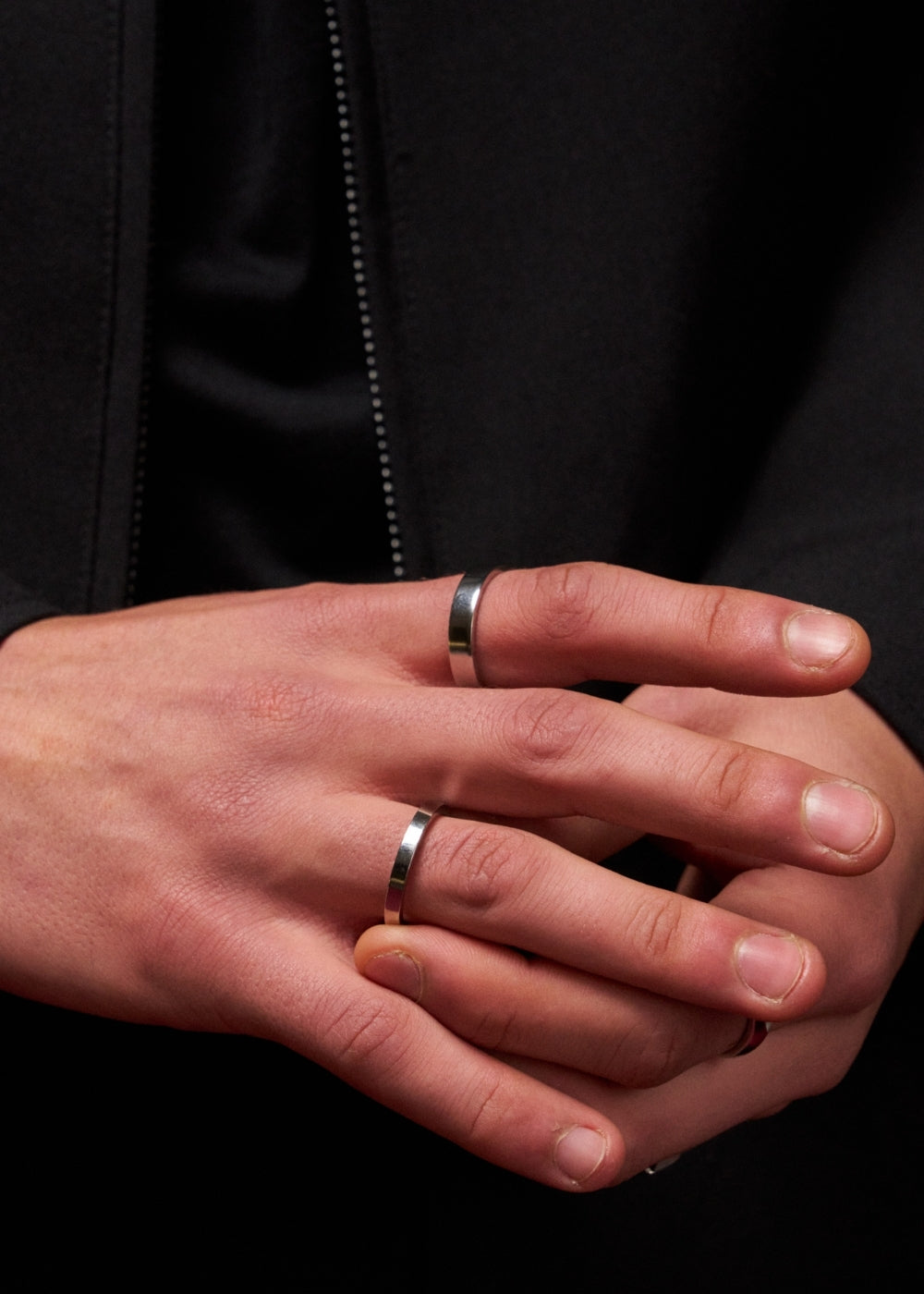
The useful part is that you only need three of them. One chain, one bracelet, one ring. That is a complete, well-rounded collection from day one, and it keeps the spend low while you work out what you actually like wearing.
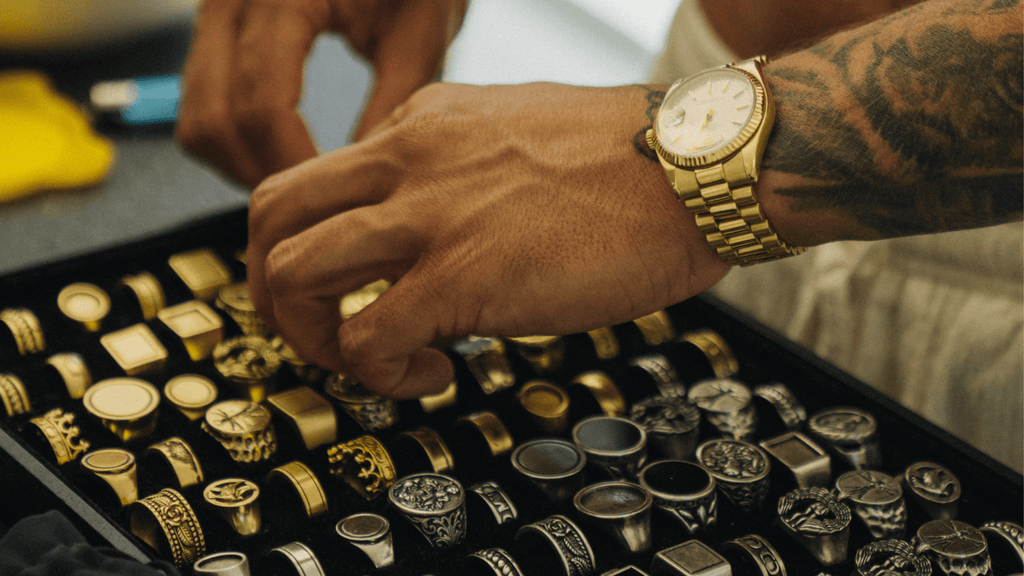
Available in silver, gold and rose gold.
A plain band is the closest thing to a zero-room-for-error piece. No length to get right, no clasp sitting awkwardly, nothing to catch on a collar. The CRAFTD band has a brushed interior for a better fit, and it is the piece most likely to still be on your hand in ten years. Also in a 3mm if you want it quieter.
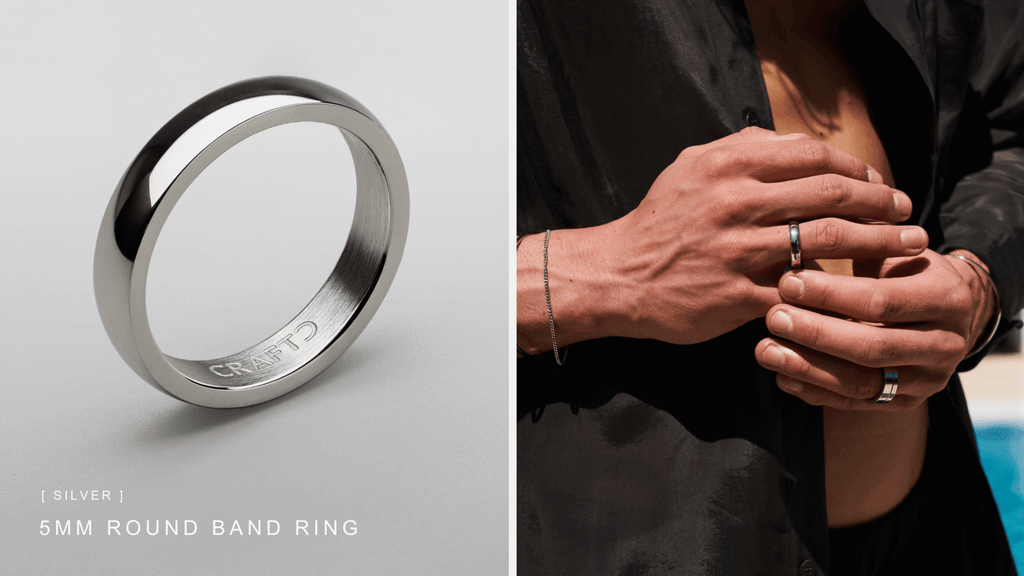
Available in silver, gold and rose gold.
Clean, sleek and understated. The box chain goes with anything, dressed up or down, worn solo or under a pendant later on. If you are only ever going to own one chain, this is the one. There is a matching box bracelet if you want the set to read as a set.
Not sure what length to order? Our chain length guide covers it properly, and types of men's chains walks through every link style if you want to go beyond the box.
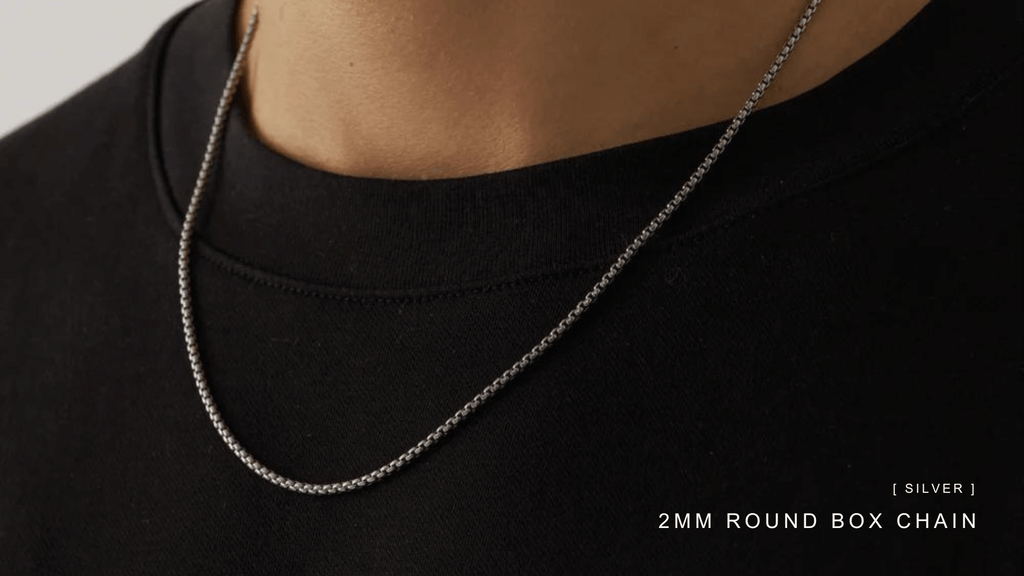
Available in silver, gold and rose gold.
A cuff is the easiest bracelet to live with because there is no clasp to fail and no slack to jangle. It sits where you put it. It also handles formal better than almost anything else on this page. There is a 5mm version if you want more presence on the wrist.
Every piece we make is waterproof, scratch resistant and will never tarnish. That is the reason these three work as everyday pieces rather than things you take off at the door.
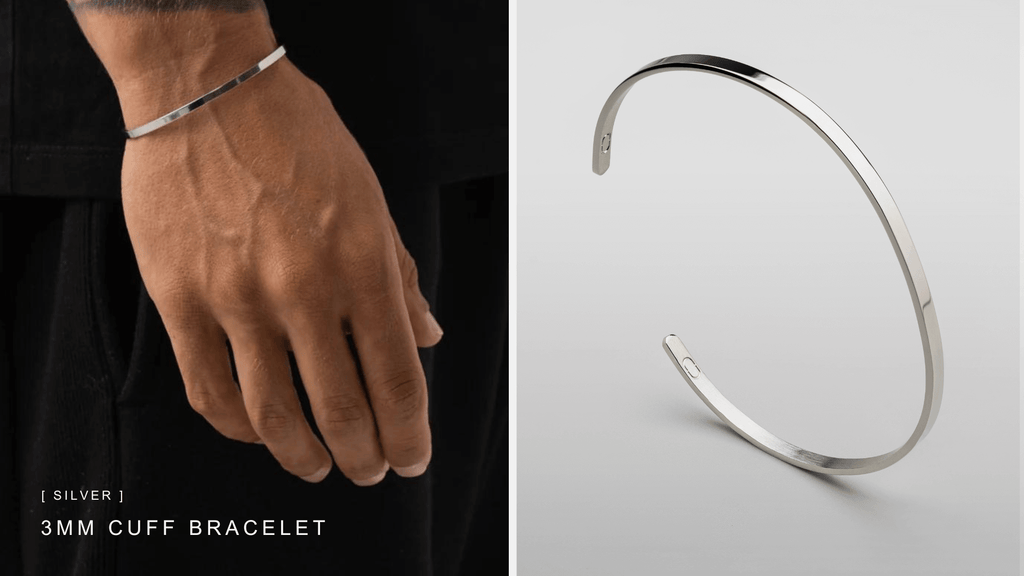
Worn together, those three are a faultless everyday combination. Worn separately, each one still works. That is the whole point of starting here.
Two practical notes before you order. Chain length is the single most common thing people get wrong, and it is worth two minutes rather than a guess: most men land between 50cm and 55cm for a chain worn on its own, but height and collar size move that more than you would think. Ring sizing is the other one. Fingers swell in heat and shrink in cold, so size yourself in the middle of a normal day rather than first thing in the morning or straight after the gym, and if you are between sizes on a wide band, go up rather than down.


Once the basics are doing their job, this is where a collection starts sounding like you rather than like a starter kit. Pieces with a bit more edge: meaningful pendants, heavier signets, things that carry a bit of weight and a bit of a story.
Signet rings are the obvious entry point because they have always been personal. Pendants are the other, and the reason they work is that nobody picks one at random. A crucifix, a St Christopher, a north star: the piece means something before you have styled it at all. If you want the background on what the symbols actually stand for, we covered it in symbols on jewelry.
On signets specifically, the two questions everyone asks are which finger and whether to engrave. The traditional answer is the little finger of the non-dominant hand, which is where signets have sat for a few hundred years, but a signet on the ring finger or index reads perfectly normally now and a heavier one often sits better there. Engraving is genuinely optional. A plain or hammered face is not a lesser version of the same thing, it is just a quieter one, and it is the easier piece to wear daily because there is nothing on it to explain.
Pendants follow the same logic in reverse. The chain should be the supporting act. A 2mm box or a thin rope lets the pendant read clearly, whereas hanging something detailed off a heavy Cuban tends to make both pieces fight for the same space.
Wear them solo, or start layering them over what you already have. The key is being comfortable trying something. Play with it until it feels right, and you will find the combinations you like without having to be told them.


The top tier. The pieces that turn heads and rarely stay in stock long. Real pearls, gemstone necklaces, iced out Cubans. This step is for when you already know what you like and you are not particularly worried about being noticed in it.
One thing worth saying plainly: a bold piece works because everything else is calm. A gemstone necklace over a plain black tee lands. The same necklace competing with three other statement pieces just looks busy. Step three is not step one with more added, it is one loud piece and a quiet everything else.
Pearls are the one that surprises people, and they are easier to wear than they look. The reason they work on men is contrast: a pearl necklace against a plain dark tee or an open collar reads as considered, where the same piece over something already patterned reads as fancy dress. Keep the rest of the outfit flat and let the pearls be the only interesting thing happening.
Iced pieces follow a harder version of the same rule. One iced item, worn alone, looks expensive. Two competing iced items usually just look like two. If you want a Cuban with stones in it and a gemstone pendant, wear them on separate days rather than separate chains.
If something catches your eye here, do not sit on it. These go fast, and the restock is never guaranteed.


Start with whichever you are more comfortable in, which for most men is silver. There is no wrong answer. The thing to get out of your head is that it is a one-time decision. It is not. Once your three everyday pieces feel natural, the single best next move is the same three in the other metal. That is when a collection stops being a set and starts being versatile.
Matching metal to outfit is simpler than it sounds. Silver sits well with creams, reds, navies, greens and grays. Gold sits well with browns, beiges and earthy tones. Black and white take either, which is why a plain tee is the easiest thing in the world to style against.
If you want the longer version of this argument, including what the two metals actually are in men's jewelry and how they wear over time, we wrote it up properly here.

Stacking is addictive. Once it clicks, the combinations are endless and you will find yourself layering on repeat. It is genuinely hard to go too far with men's jewelry, but it is not impossible, and the line is usually crossed by accident rather than on purpose.
The honest test is not a number. It is whether you are still fiddling with something an hour after you put it on. If a chain keeps tangling with a pendant, or two bracelets are climbing over each other, that is the piece to drop, not the whole look.
One to three pieces will transform an outfit. That is usually all it takes. Build from there at whatever pace suits you.
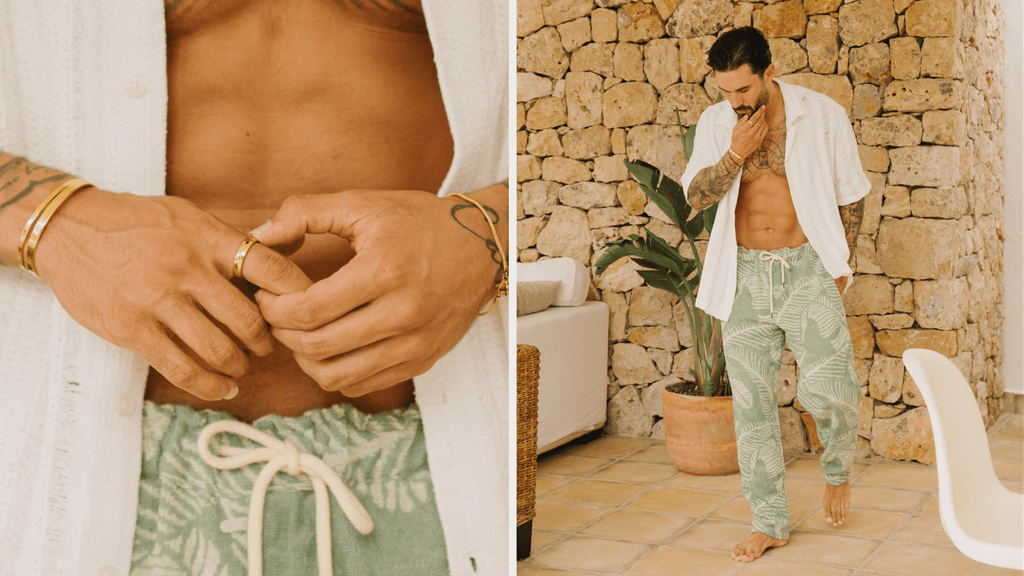
Trends are not the enemy. Some of them are just early: chain layering was a trend once and it is now closer to a default, and pearls on men went from a talking point to an ordinary thing to own in about three years. The problem is that you cannot tell which is which while it is happening.
So the safe order is base first, trend second. Get the classics in place, the cuff bracelets, the minimal chains and the signet rings, and then buy into whatever you like on top of that. If the trend lasts, it slots in. If it does not, you have lost one piece rather than a collection.
We looked at which recent men's jewelry trends actually held and which quietly died in this piece on trends, if you want the evidence rather than the opinion.
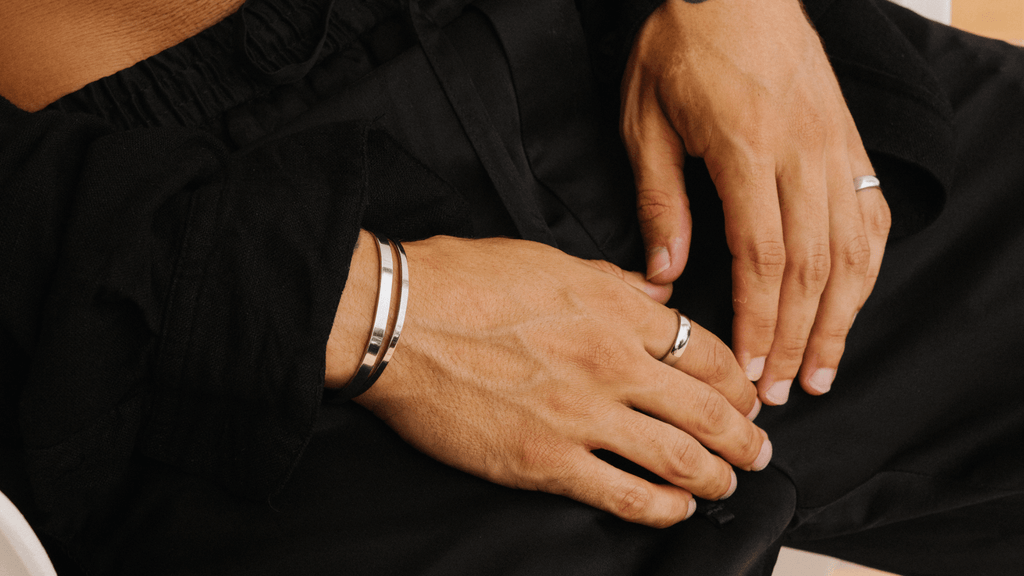
Whatever you land on, wear it like you meant it. That is not a throwaway line: the difference between jewelry that looks right and jewelry that looks borrowed is almost entirely whether the person wearing it is thinking about it.
Everyday pieces get everyday treatment, which is the point of them, but a small amount of care keeps a collection looking like it did on day one. Our pieces are waterproof and will not tarnish, so the sea, the shower and the gym are all fine. What actually dulls jewelry over time is the invisible stuff: skin oils, sun cream, aftershave and hand sanitiser, all of which leave a film that reads as the metal having gone flat.
The fix is unglamorous. Warm water, a drop of washing-up liquid, two minutes with a soft brush around the links and a proper dry with a soft cloth. Do that every few weeks and you will almost never need to do anything more serious. The one habit worth building is putting jewelry on last, after aftershave and moisturiser, and taking it off first.
If you want the detail, we have full guides on cleaning gold jewelry and on keeping sterling silver looking new, including the household methods that are worth using and the two or three that quietly damage plating.
A strong collection is not about following the steps in order. It is about ending up with the right mix of everyday pieces and a couple that are properly yours.
Start simple. Add meaning. Go bold when you are ready. The only test that matters is whether it feels good when you put it on.
Start with three pieces and no more: a chain, a bracelet and a ring. A 2mm box chain, a 3mm cuff and a plain band ring will carry almost any outfit you own, and because none of them argue with each other you can wear all three at once on day one. Everything else is an addition to that base rather than a replacement for it.
The pieces you stop noticing. A thin chain, a simple bracelet and a band ring are the three that survive a work day, a gym bag and a shower without you thinking about them. Save the pearls, gemstones and heavier Cubans for when you actually want them seen.
Yes, and the old rule against it was never really a rule. Mixing works best when it looks deliberate rather than accidental, so give one metal the majority and let the other appear once or twice. A silver chain with a gold signet reads as a choice. An even split tends to read as indecision.
One to three while you are finding your feet, then as many as you can wear without fidgeting with them. The honest test is whether you are still adjusting a piece an hour after you put it on. If you are, it is one too many or the wrong length.
It has to sit with it, not match it. Silver works with creams, reds, navies, greens and grays. Gold works with browns, beiges and earthy tones. Black and white take either, which is why a plain tee is the easiest thing in the world to style jewelry against.
A plain band ring. It is the one piece with almost no wrong version: no length to get right, no clasp to sit awkwardly, nothing to catch on a collar. A 2mm box chain runs it close for the same reason.
No. Every piece we make is waterproof, scratch resistant and will never tarnish, which is the reason the starter three work as everyday pieces rather than occasion pieces. You can wear them in the shower, the sea and the gym and they will look the same afterwards.

Summer Necklaces for Men: Pearls, Color and Beads
What necklace should you wear this summer? Start with real pearls, then add color, beads or stones. Here are the best summer necklaces for men and how to wear them.
Read more
Men's Jewelry Essentials: The First Pieces to Own, From Neck to Hands
New to men's jewelry, or buying for someone who is? Start with three pieces: a chain, a bracelet and a ring. Here's which ones, why, and how to wear them together.
Read more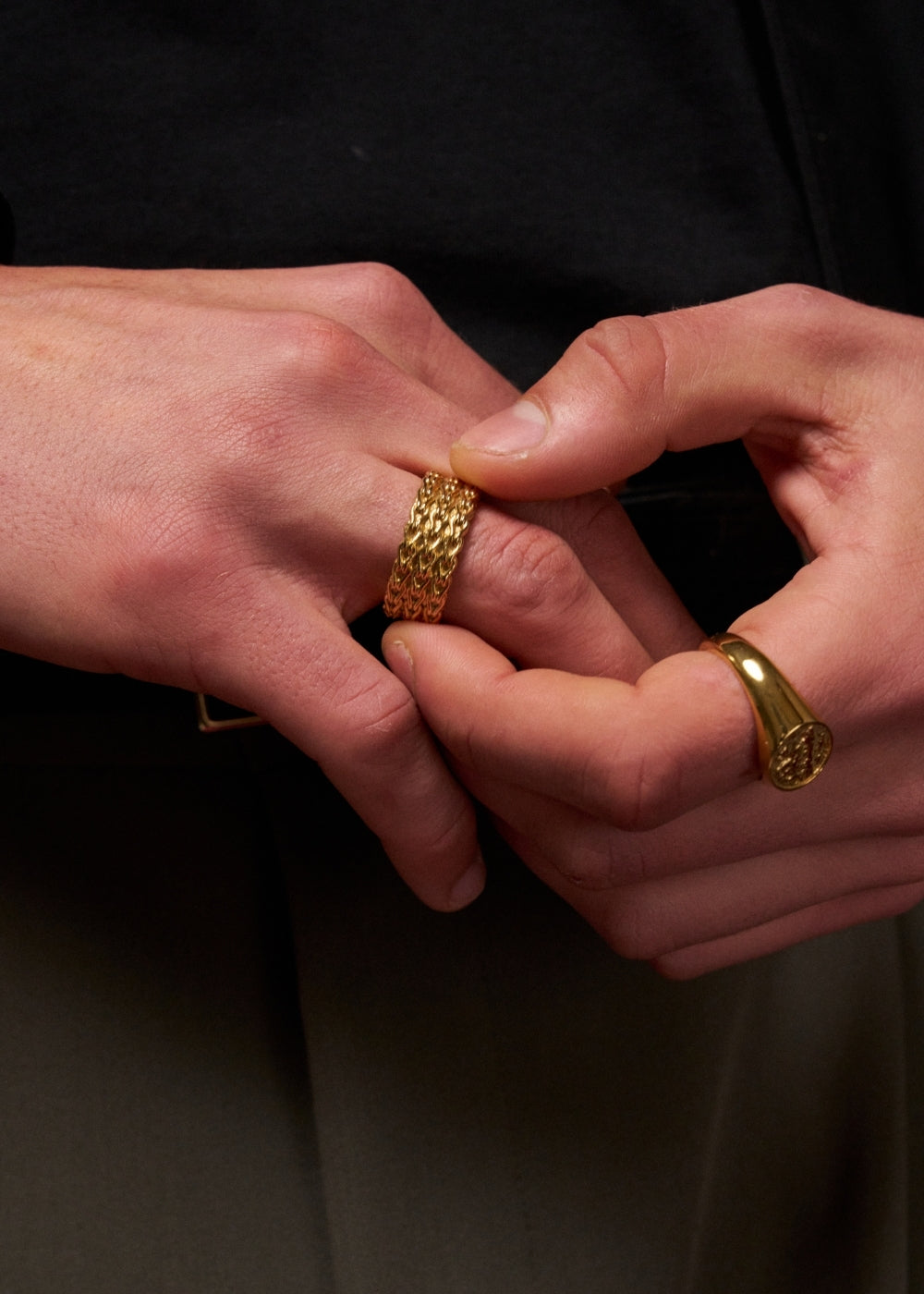

Leave a comment
This site is protected by hCaptcha and the hCaptcha Privacy Policy and Terms of Service apply.