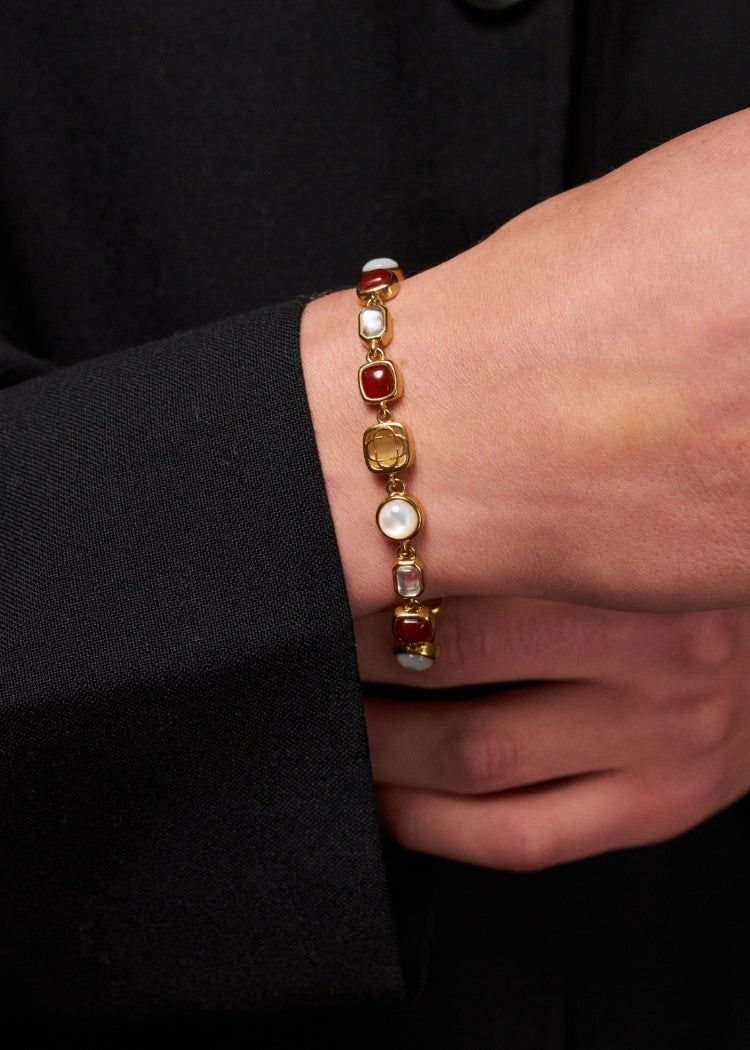
GEMSTONE BRACELETS
SHOP NOW



Cart
Your cart is empty
Your gifting options
Make your gift extra special with our luxury packaging options. Select a gift bag, gift box or a combination to create the perfect presentation.

Luxury Gift Box, Gift Bag & Wrapping Kit ($8.99)
Includes: CRAFTD Luxury Gift Box, Gift Bag, Tissue Wrapping Paper & Ribbon

Meaning Card ($2.99)
Add more meaning to your gift with a meaning card included with your order.
15 variations available

Luxury Gift Box ($5.99)
Choose your option
To My Boyfriend

To My Husband

To My Soulmate

To My Son

To My Grandson

To My Brother

To My True Friend

To My Dad

A Symbol Of Strength

A Symbol Of Faith

A Symbol Of Protection

A Symbol of Luck

A Symbol Of Safe Travel

A Symbol Of Self Belief

A Symbol Of Adventure

Let's cut to the chase: forget most of the rules.
Men's jewelry is overrun with them, and most of these so-called rules only suffocate your creativity. In truth, there's no secret recipe for the perfect look. If it feels right to you, it's probably right. That said, even in a world without rules, a bit of guidance goes a long way, especially if you're new to this and want to feel more confident in your choices.

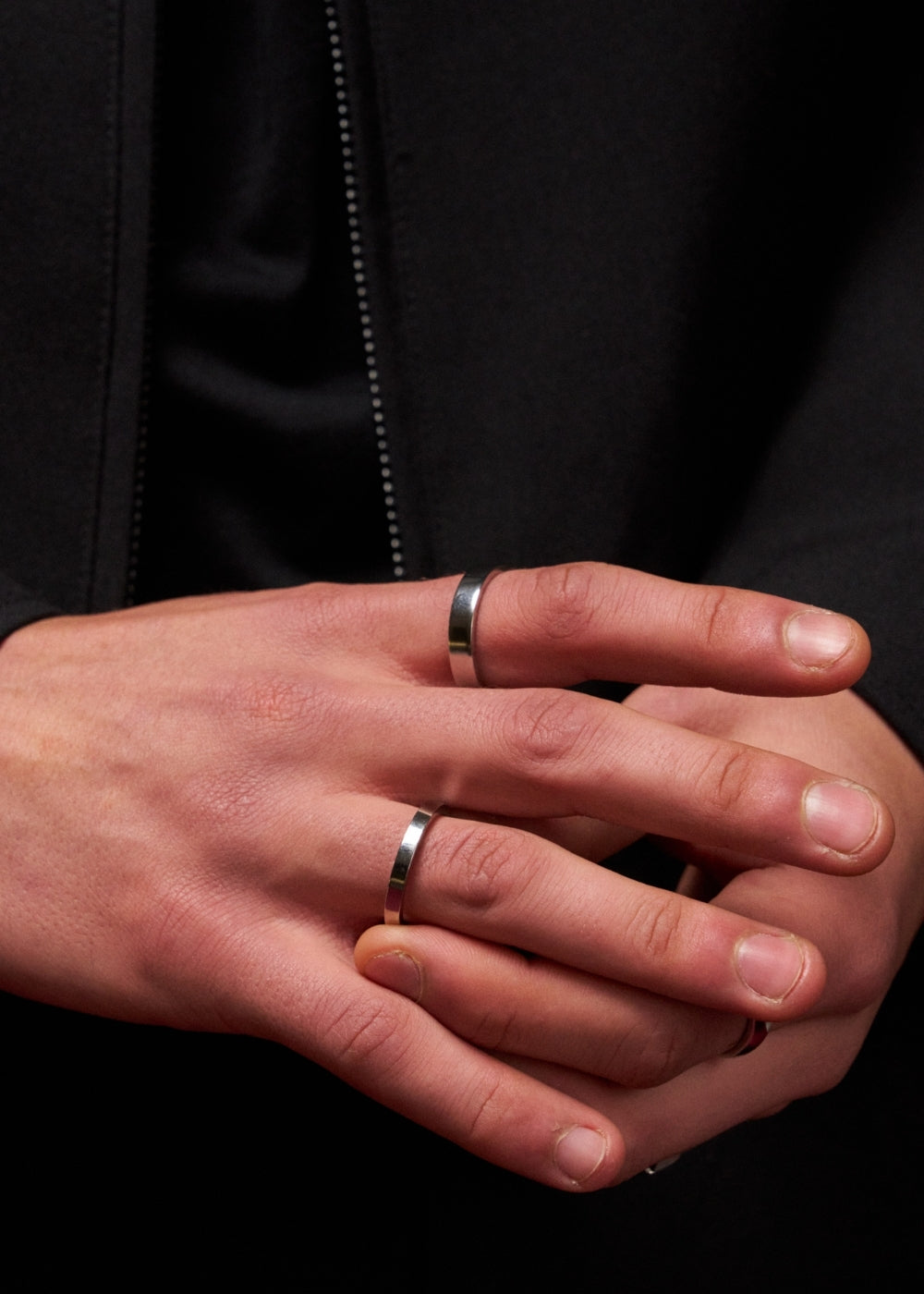
Two cuffs and a couple of plain rings. No rules broken, none needed.
Below we'll cover whether men can wear jewelry, which of the old rules you can ignore, the few that actually matter, the rule for bracelets, how many rings and necklaces to wear, where to start, and the one unspoken rule worth following.
Jump to:
Yes, and they always have. Signet rings, religious pendants, chains and even pearls were worn by men for centuries before anyone decided jewelry was mostly for women. Today a chain, a ring or a bracelet is as normal a part of a man's outfit as a watch.
The real question most men are asking is whether they can pull it off. The answer is almost always yes, as long as you start simple and wear pieces that suit your style. Confidence comes from wearing it, not from waiting until you feel ready.
Most of the rules you'll hear were written for a different era. These are the ones worth letting go.
Outdated. Mixed metals look deliberate when you repeat each one at least twice, say a gold chain with a gold ring, and a silver bracelet with a silver ring. A two-tone watch or pendant ties the whole thing together.
That was the rule for a generation that didn't have much choice. Chains, bracelets and rings are now everyday menswear, and most men wear at least one piece daily.
The opposite is true. The best pieces are the ones you wear every day, until they feel like part of you. Save the statement pieces for the weekend if you like, but the basics should be on you most days.
Your jewelry should suit your outfit, which isn't the same thing. A silver chain doesn't need a gray shirt. It just needs a neckline it can sit against.

Start with simple pieces you'll wear every day.
A handful of principles make the difference between jewelry that looks right and jewelry that looks like an accident. None of them are about what you're allowed to wear.
Match the size of the piece to your build and the rest of the look. A 2-3mm chain suits almost everyone. A heavy Cuban needs a bit of frame and a simpler outfit around it. Our guide to styling a Cuban link chain covers widths in detail.
A bracelet should leave room for about one finger between the metal and your wrist. A ring should slide on with a little resistance and come off over the knuckle. A chain should sit where you want it to be seen, usually at or just below the collarbone.
Pick the piece you want people to notice and let everything else support it. A bold chain with simple hands, or statement rings with a fine chain. When every piece is loud, none of them are.
Two pieces that don't tarnish or turn your skin green will do more for you than ten that do. If you're choosing between metals, our comparison of sterling silver vs stainless steel explains which suits which kind of wear.
The one place a rule still applies: occasions. For a job interview, a funeral or a formal meeting, dial it down to a ring, a watch and anything else that sits quietly. For a wedding or a night out, go as bold as you like.

Gold against black: one metal, repeated, is the easiest look to get right.
If there is one, it's balance. Most men wear a watch on their non-dominant wrist and a bracelet or two on the other. Stacking a slim bracelet next to your watch works too, as long as the watch stays the main piece on that wrist.
As a guide, one to three bracelets per wrist is plenty. Mix textures, like a chain bracelet with a cuff or a bead bracelet, rather than three of the same thing. Our full guide on how to wear men's bracelets goes through wrists, fit and stacking.
Anywhere from one to four across both hands is easy to wear. Beyond that it starts to look deliberate, which is fine if that's the point. A few things help:
For more on choosing and wearing them, see the essential types of men's rings and our guide to styling a signet ring.
One to three is the sweet spot. If you layer, stagger the lengths by about 2 inches so each piece has its own space, and keep the widths varied: a fine chain, a slightly heavier one, and a pendant. The pendant usually goes on the longest chain so it has room to hang.
For every chain style side by side, see types of men's chains, and for what to wear them with, what to wear with a Cuban link chain.

Layered pendants at different lengths, so each one has room.
If you're new to this, here's the path most men follow, in five quick steps.
For the full version of this journey, read our three-step guide to wearing men's jewelry, and for exactly which pieces to buy first, see men's jewelry essentials.

A bolder look is just more of the same rules: proportion, spacing, one metal.
Ask yourself who you want to become. If your current self doesn't match the person you want to be, jewelry can be part of how you get there. Each piece can stand for a trait you're working towards. A Compass Pendant can signal a commitment to adventure and finding your own way, while a Pearl Bracelet can stand for growing social confidence. Our guide to meaningful jewelry for men goes deeper on what different pieces stand for.
In the end, it's about how you want to feel: comfortable and confident in your own skin. So if you take one thing from this, let it be the unspoken rule. Style yourself to mirror the energy you want to embody. When it comes to personal style, the only rules worth following are your own.
Yes. Men have worn jewelry for thousands of years, from signet rings to religious pendants, and today chains, rings and bracelets are an everyday part of men's style. If it suits you and you're comfortable in it, it's the right choice.
Yes. The old rule against it is out of date. The trick is to make it look deliberate: repeat each metal at least twice, or tie them together with one two-tone piece, like a watch or a pendant.
There's no fixed number, but a useful limit is one focal point. If a heavy chain is the statement, keep your hands and wrists simpler, and the other way round. When every piece is competing, it's too much.
Most workplaces are fine with a ring or two, a watch, a slim bracelet and a fine chain under the collar. Save the heavy chains and large pendants for the weekend if your job is client-facing or formal.
It helps, but it isn't required. Matching the metal of your watch and bracelet looks neat. If they don't match, repeat each metal somewhere else, on a ring or a chain, so the mix looks intentional.
Most men wear a watch on their non-dominant wrist and a bracelet on the other. You can also stack a slim bracelet next to your watch. Either works, as long as neither wrist looks overloaded.
Yes, as long as it's made for it. Stainless steel and quality sterling silver pieces are built for daily wear, which is why a few simple essentials tend to become pieces men never take off.
Style yourself to mirror the energy you want to embody. Rules on metals and numbers matter far less than wearing pieces that feel like you, or like the person you're becoming.
Ignore the rules that tell you what you're allowed to wear. Keep the ones about proportion, fit and focus. Then build a collection that feels like you.
Start with the Minimals, or see what other men are wearing in our Bestsellers. If you want the full picture of what's out there, our guide to men's jewelry styles explains every look.


What Is a Toggle Necklace and How Do You Wear It?
A toggle chain necklace is defined by its closure rather than its links, with a T-bar clasp designed to be worn on show. Here’s how it works, where the style came from and what makes it distinctive.
Read more
Inspirational Jewelry for Men: Pieces That Stand for Something
"Just be yourself" is nice advice, but it doesn't always get you anywhere. A piece of jewelry with meaning can. Here's what each symbol stands for and how to choose yours.
Read more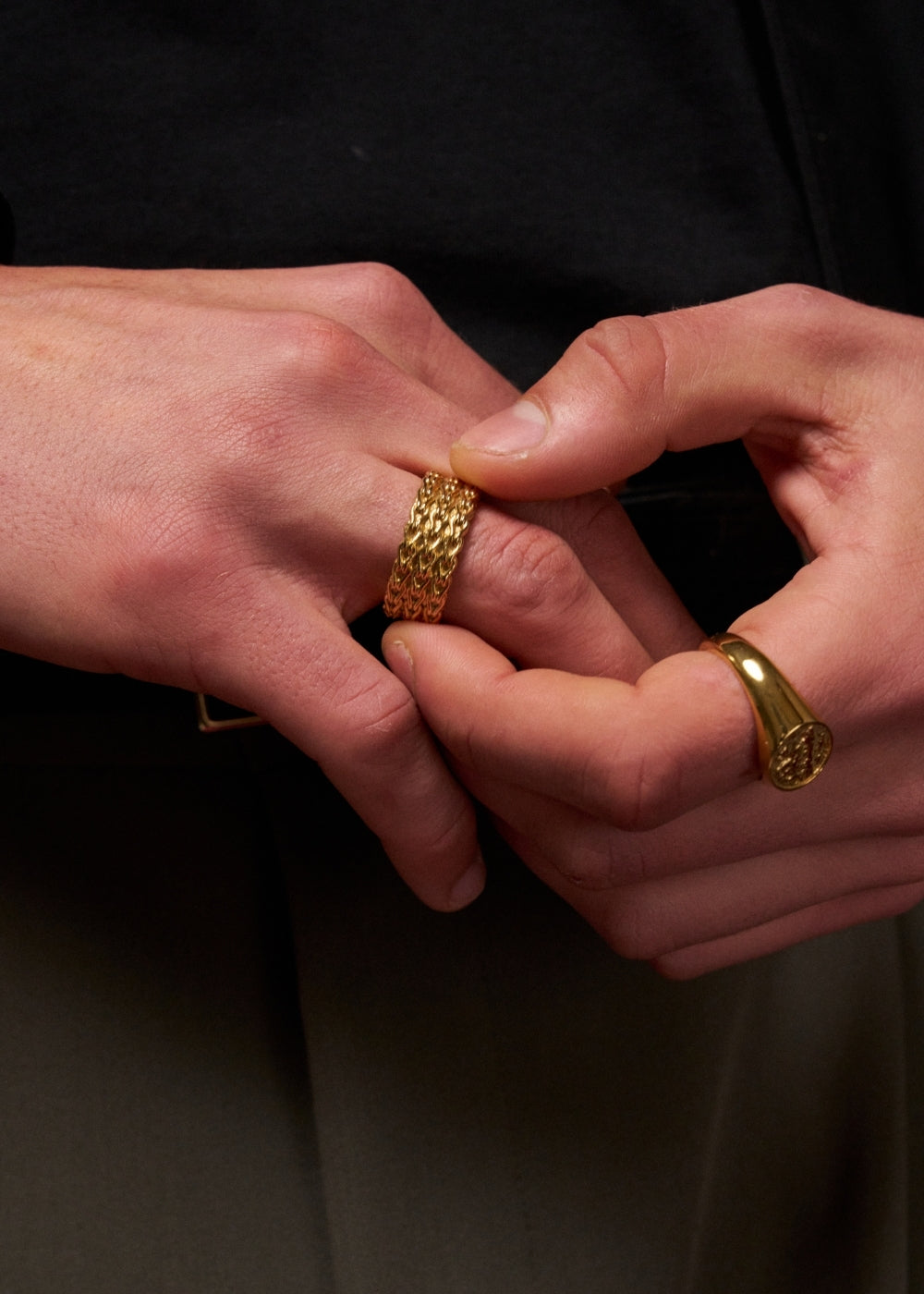

Leave a comment
This site is protected by hCaptcha and the hCaptcha Privacy Policy and Terms of Service apply.